Common Mistakes When Choosing Powder Coating for Industry
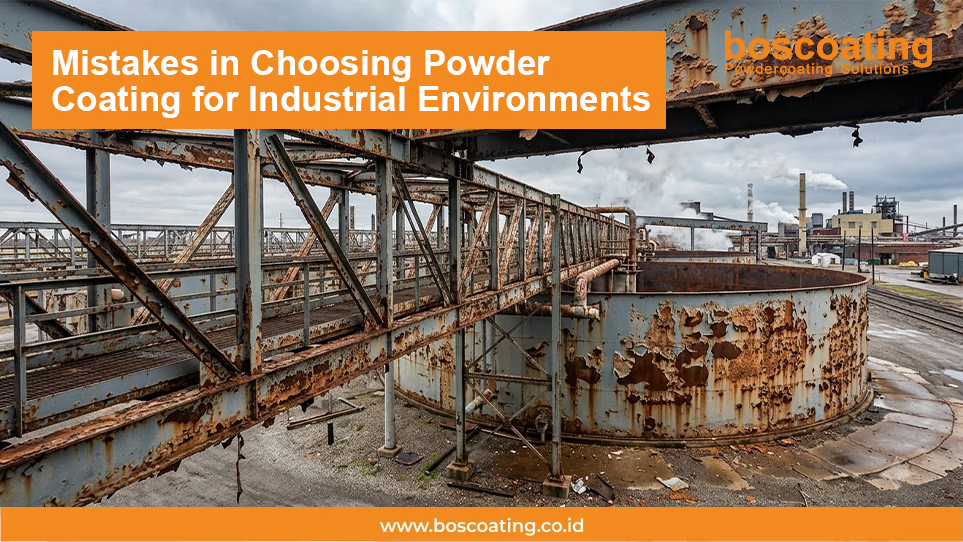
In the manufacturing and construction industries, industrial powder coating is not only about the final appearance of a product. The coating layer also functions to protect materials from corrosion, chemicals, humidity, heat, and harsh working environments.
However, many companies still choose powder coating based only on color or price without considering the overall industrial application requirements. As a result, the coating quickly deteriorates, peels off, or even fails to protect the material properly.
Here are some common mistakes when choosing powder coating for industrial environments.
1. Not Adjusting to the Operational Environment
Every industrial environment has different challenges. Outdoor areas require resistance against:
- UV exposure
- Rain & humidity
- Temperature changes
- Corrosion
Meanwhile, certain production areas may be exposed to:
- Chemicals
- Oil & grease
- Abrasion
- High temperatures
A common mistake occurs when indoor powder coating is used for outdoor or heavy-duty applications. As a result, the color fades quickly and the coating layer becomes easily damaged. Therefore, selecting the right industrial powder coating must consider the actual working conditions in the field.
2. Ignoring Surface Preparation
High-quality powder coating can still fail if surface preparation is not properly performed. Some common issues include:
- Oily surfaces
- Rust not completely removed
- Dust attached before coating
- Incorrect pretreatment process
Surface preparation is the main foundation of coating adhesion. Without this process, the powder coating layer may experience:
- Peeling
- Bubbling
- Uneven surfaces
- Faster corrosion
In industrial projects, pretreatment processes such as sandblasting or chemical cleaning often become key factors in determining coating lifespan.
3. Choosing the Wrong Type of Powder Coating
Not all powder coatings have the same characteristics.
Some commonly used types include:
- Epoxy powder coating
- Polyester powder coating
- Hybrid powder coating
- Polyurethane coating
For example:
- Epoxy has excellent chemical resistance but poor UV resistance
- Polyester is more suitable for outdoor use
- Hybrid is commonly used for indoor industrial applications
Choosing the wrong coating type can lead to poor performance and increased maintenance costs.
4. Focusing Only on the Cheapest Price
Low prices may seem attractive initially, but they are not always efficient in the long term. Low-quality powder coating can cause:
- Faster cracking
- Rapid color fading
- Low corrosion resistance
- Higher repaint frequency
In industrial environments, downtime caused by coating failure can create costs far greater than the price difference of the coating material itself.
Therefore, it is important to consider:
- Durability
- Environmental resistance
- Result consistency
- Coating lifespan
5. Not Paying Attention to Coating Thickness
Improper coating thickness can affect finishing performance.
Too thin:
- Insufficient protection
- Easier corrosion
Too thick:
- Risk of cracking
- Orange peel effect
- Uneven surface
Thickness standards are usually adjusted according to industrial applications and the type of material used. Quality control in the powder coating process is an important part of maintaining consistent final results.
Curing is the heating process that allows powder coating to form an optimal protective layer. If the temperature or curing time is incorrect:
- The coating does not fully cure
- Adhesion decreases
- Coating durability weakens
This mistake often occurs in production processes with unstable oven control systems. Therefore, monitoring temperature and curing time is very important in industrial powder coating systems.
7. Not Considering Long-Term Maintenance
Many companies focus only on the initial finishing without considering long-term maintenance.
In fact, industrial environments can accelerate coating damage due to:
- Friction
- Chemical exposure
- High humidity
- Environmental contamination
Choosing the right powder coating can help:
- Reduce maintenance costs
- Extend material lifespan
- Maintain product appearance
- Reduce recoating frequency
Conclusion
Choosing the right industrial powder coating should not be based solely on color or price. Factors such as working environment, material type, surface preparation, curing process, and durability must all be carefully considered.
Proper coating selection helps improve:
- Corrosion resistance
- Product lifespan
- Maintenance efficiency
- Industrial finishing quality
In modern industrial applications, powder coating is not just a color layer, but an essential part of long-term material protection and performance.