Differences Between Indoor and Outdoor Coating Requirements
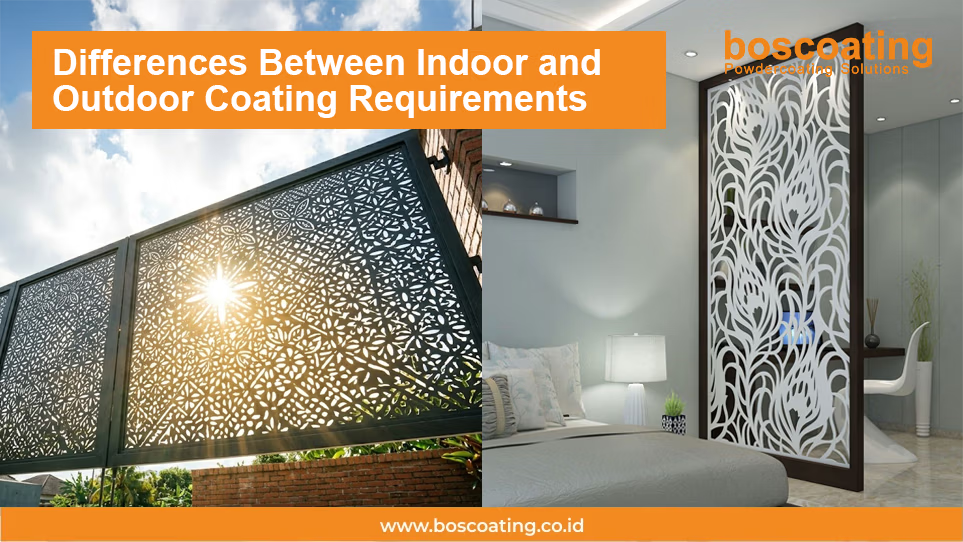
In the industrial, fabrication, and construction sectors, coating systems play a critical role in protecting metal surfaces from damage, especially corrosion. However, not all environments require the same level of protection.
One of the most fundamental considerations when selecting a coating system is understanding the difference between indoor and outdoor coating requirements.
Choosing the right system will impact durability, finishing quality, and long-term cost efficiency.
1. Definition of Indoor and Outdoor Coating
Indoor Coating
Indoor coating is applied to materials or products used inside enclosed environments. These conditions generally have:
- Stable humidity levels
- Minimal UV exposure
- Lower corrosion risk
- No direct exposure to rain
Common applications:
- Industrial machinery
- Storage racks
- Equipment inside factories
- Mechanical components
Outdoor Coating
Outdoor coating is used for materials exposed directly to external environments, such as:
- Sunlight (UV exposure)
- Rain and water
- Higher humidity
- Dust and pollution
Common applications:
- Railings and fences
- Building structures
- Outdoor equipment
- Infrastructure components
2. Environmental Factors That Affect Coating
The key difference between indoor and outdoor environments lies in exposure levels.
Main factors:
- Humidity : More stable indoors, more fluctuating outdoors
- UV Exposure : Minimal indoors, direct exposure outdoors
- Water and Rain : No direct exposure indoors, direct exposure outdoors
- Dust and Pollution : Higher in outdoor environments
- Temperature Changes : More extreme outdoors
3. Corrosion Risk Differences
Corrosion is one of the most critical factors in determining coating requirements.
Indoor:
- Lower corrosion risk
- Controlled environment
- Standard coating systems are often sufficient
Outdoor:
- Significantly higher corrosion risk
- Influenced by water, humidity, and pollution
- Even more critical in: Industrial areas, Coastal regions, Open environments
The higher the exposure, the higher the protection required.
4. Coating Protection Requirements
Environmental differences directly affect coating requirements.
Indoor:
- Focus on: Appearance & Basic protection
- Simpler coating systems are typically sufficient
Outdoor:
- Requires: Corrosion resistance, UV resistance & Weather resistance
Higher-specification coating systems are generally required
5. Types of Coating Used
For Indoor Applications:
- Liquid paint systems
- Epoxy coating
- Standard powder coating
For Outdoor Applications:
- Outdoor-grade powder coating
- Epoxy + top coat systems
- Multi-layer coating systems
- Galvanizing (for maximum protection)
Selection depends on required durability and budget.
6. Differences in Appearance and Finishing
Aesthetic considerations also differ between indoor and outdoor applications.
Indoor:
- Focus on: Smooth finish, Color consistency, Clean appearance
- Less exposure to environmental degradation
Outdoor:
- Must consider: UV resistance, Gloss retention, Long-term color stability
Coating quality significantly affects long-term appearance.
7. Coating Lifespan
Indoor:
- Generally longer lifespan
- Minimal environmental degradation
- Lower maintenance requirements
Outdoor:
- Lifespan varies depending on exposure
- Influenced by: UV exposure, Rain and humidity
- More prone to gradual degradation
Higher exposure typically results in shorter coating lifespan.
8. Cost Considerations
Coating selection is also closely related to cost.
Indoor:
- Lower overall cost
- Simpler coating systems
- Suitable for standard production
Outdoor:
- Higher cost
- Requires more durable materials
- More complex application process
However, higher cost often correlates with longer durability and better protection
9. Common Applications
Indoor Applications:
- Industrial machinery
- Factory components
- Storage systems
- Spare parts
Outdoor Applications:
- Steel structures
- Railings and fences
- Outdoor equipment
- Industrial infrastructure
Role of Powder Coating in Indoor and Outdoor Use
Powder coating is one of the most versatile finishing solutions for both environments.
- Indoor: Provides a clean, consistent, and durable finish
- Outdoor: Offers additional protection against weather conditions
However, it is important to note that: Not all powder coatings have the same specifications
For outdoor applications, it is essential to use powder coatings with proper UV and weather resistance.
Conclusion
The difference between indoor and outdoor coating requirements lies in the level of environmental exposure and the risk of material degradation.
- Indoor environments are more stable, requiring lower levels of protection
- Outdoor environments require higher protection due to exposure to weather conditions
- The selection of coating systems should consider: Environment, Function, Aesthetics, and Budget
With the right selection, a coating system can provide optimal protection while maintaining long-term appearance and performance. For professional powder coating solutions in Surabaya and Sidoarjo, Boscoating provides coating services tailored to both indoor and outdoor application needs.