Facade Louvers Guide to Choosing the Right Finish and Color
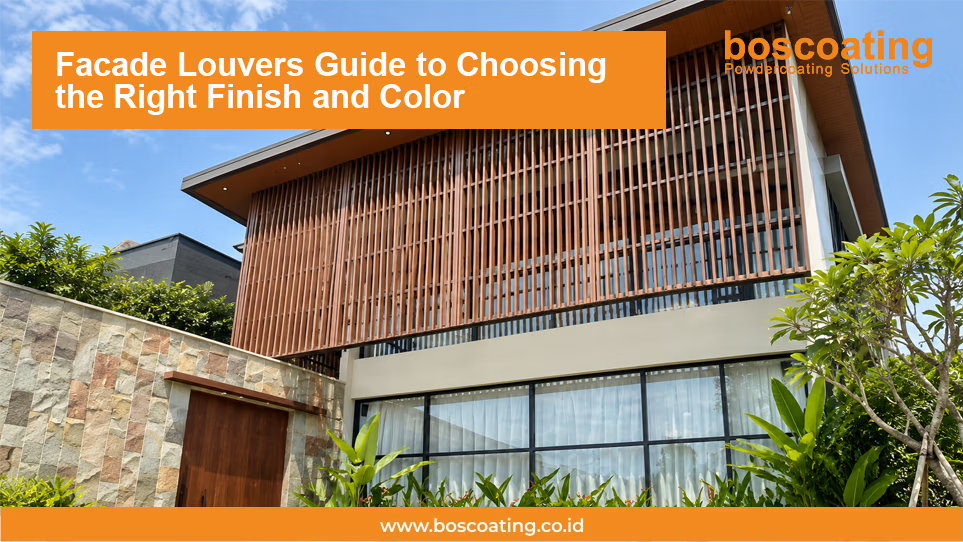
Facade louvers are increasingly used as architectural elements in modern buildings. In addition to adding visual character, louvers can help control light, provide privacy, and create depth on otherwise flat facade surfaces.
Because they are installed on the exterior of a building, the choice of material and finish cannot be based on appearance alone. Facade louvers are exposed to rain, humidity, dust, sunlight, and other environmental conditions.
For this reason, the finish and color should be considered during the design stage, rather than only after the louvers have been fabricated.
The Role of Louvers in Facade Design
Louvers can provide both functional and aesthetic value to a building. From a design perspective, louver patterns can create rhythm and add depth to a facade. Functionally, they can help reduce direct sunlight, provide a certain level of privacy, or act as a visual transition between indoor and outdoor spaces.
Louvers can also be used to create different architectural styles, ranging from minimalist to modern and contemporary. Because they can become a prominent part of the facade, the selected color and finish will have a significant influence on the overall appearance of the building.
Common Materials Used for Facade Louvers
Facade louvers can be manufactured from various types of metal, depending on the design, dimensions, installation location, and project requirements. Common materials include:
- Aluminium.
- Steel or mild steel.
- Galvanized steel.
- Custom-fabricated metal components.
Each material has different characteristics and may require a different finishing approach. For example, when steel is used for exterior louvers, corrosion protection should be an important consideration, particularly when the components are exposed to outdoor conditions.
Therefore, the substrate material should ideally be considered together with the finishing system from the beginning.
Why Is Finishing Important for Facade Louvers?
Unlike interior elements, facade louvers are directly exposed to outdoor environmental conditions. Their surfaces may be exposed to:
- Rain.
- Humidity.
- Sunlight.
- Dust.
- Air pollution.
- Temperature changes.
Without suitable surface protection, metal can experience changes in appearance or corrosion over time. The finish provides surface protection while also determining the final appearance of the louvers.
For this reason, the finishing system should be selected based on two key considerations: appearance and protection.
Consider the Building Location
The surrounding environment has a significant influence on finishing requirements. A building in an urban area may experience higher levels of dust and air pollution. Buildings located in humid environments or near the coast may face more demanding conditions for exterior metal.
Some factors to consider include:
- Urban environments.
- High-humidity areas.
- Coastal locations.
- Areas with high rainfall.
- Direct sunlight exposure.
- Environments with high levels of air pollution.
The more demanding the environment, the more important it becomes to select a finishing system appropriate for the actual application.
Choosing a Finishing System
Powder coating is one finishing option that can be considered for various metal facade components. In addition to providing color, powder coating creates a coating layer on the metal surface that provides protection while also delivering a decorative appearance.
Factors to consider when selecting a finishing system include:
- Type of metal.
- Environmental conditions.
- Required level of durability.
- Visual requirements.
- Maintenance requirements.
- Expected service life.
The coating system should be selected based on the actual project conditions rather than simply the desired color or appearance.
Choosing a Color for Facade Louvers
Color is an important part of louver design because these elements are usually highly visible from outside the building. Color can be used to make the louvers blend with other architectural elements or deliberately turn them into an architectural accent.
Several approaches can be considered.
- Matching the Building Color : Louvers can be finished in a color that complements the walls, window frames, or other facade elements, allowing them to integrate naturally with the building.
- Creating Contrast : A contrasting color can make the louver pattern more visible and give the facade a stronger architectural character.
- Using Neutral Colors : Black, grey, white, and other neutral tones are flexible choices that can work with a wide range of architectural concepts.
- Using Custom Colors : For specific projects, custom colors can be selected to complement the architectural concept or reinforce a company's visual identity.
Color and Architectural Character
Different colors can create different impressions of a building.
- Black can create a modern, bold, and elegant appearance.
- Grey provides a more neutral and contemporary character.
- White can create a clean and lightweight visual impression.
- Earth tones can be used to create a more natural visual relationship with the surrounding environment.
Custom colors can also be used when a project requires a more distinctive architectural identity. There is no universally correct color. What matters is how the selected color interacts with the building's materials, geometry, glass, walls, and other facade elements.
Consider the Scale and Geometry of the Louvers
Color cannot be separated from the shape and dimensions of the louvers. Closely spaced louvers create a different visual pattern from louvers with wider spacing. Similarly, large and small profiles produce different visual effects.
Important factors include:
- Profile dimensions.
- Spacing between louvers.
- Vertical or horizontal orientation.
- Pattern density.
- Profile shape.
- Overall facade area.
On a large facade, a particular color may appear very different compared with the same color shown on a small sample. For this reason, color evaluation should not rely solely on a small sample when the final application covers a large surface area.
Consider Light and Viewing Distance
Facade louvers will be viewed under different lighting conditions. During the day, natural light can make a color appear different compared with the afternoon or evening, when artificial lighting becomes more prominent.
Louvers should also be considered from different viewing distances. A color and pattern that looks attractive up close may create a completely different visual effect when viewed from the street or from across the building.
This is particularly important for projects involving large facade areas.
Maintenance and Color Consistency
Because facade louvers are exposed to outdoor conditions, dust and dirt will naturally accumulate on their surfaces. Therefore, ease of maintenance should also be considered. Regular cleaning can help maintain the appearance of the finished surface.
For projects involving many individual components, color consistency is another important consideration. The color specification should be established from the beginning and clearly communicated to both the fabricator and coating provider. This helps reduce the possibility of color variations between different components or production batches.
What Should Be Prepared Before Coating?
Before facade louvers are sent for finishing, several details and conditions should be confirmed. These may include:
- Type of material.
- Surface condition.
- Component dimensions and geometry.
- Areas requiring masking.
- Hanging points.
- Color specification.
- Surface finish specification.
- Quantity of components.
Details such as hanging points and masking requirements should ideally be considered during fabrication so that the coating process can be carried out more efficiently. Surface preparation should also not be overlooked, as the condition of the substrate before coating has a direct influence on the final result.
Conclusion
Facade louvers are more than decorative elements. Their geometry, material, finish, and color all contribute to both the appearance and performance of the building.
The right finishing system should consider environmental conditions, substrate material, durability, maintenance, and visual requirements. Meanwhile, color should be selected by considering the building as a whole rather than evaluating a color sample in isolation.
Powder coating can be one finishing option for metal facade louvers when a combination of surface protection and consistent appearance is required.
With proper planning from the design and fabrication stages through material selection, color specification, and coating, facade louvers can become architectural elements that not only look attractive but also remain suitable for the building's requirements over the long term.