Guide to choosing Industrial Safety Colors in Powder Coating
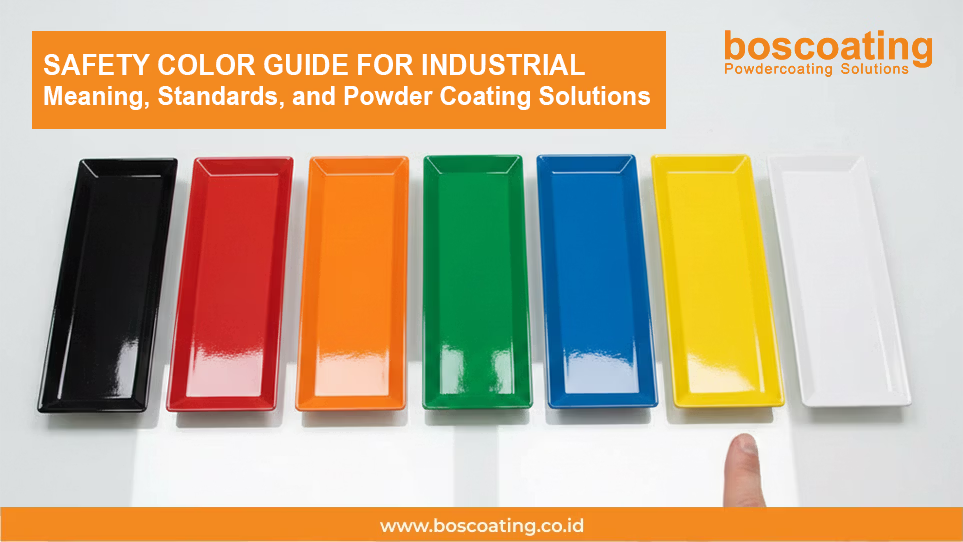
Safety Color Guide for Industrial Applications: Meaning, Standards, and Powder Coating Solutions
In industrial environments, workplace safety is not only about procedures and protective equipment. One of the most important—and often underestimated—elements of safety is the proper use of safety colors. Safety colors are a universal visual communication system used to warn, guide, and identify critical areas or equipment in factories, warehouses, and production facilities. From fire hydrant cabinets to guarding fences and evacuation routes, safety colors play a key role in reducing accidents and improving operational efficiency. For many industrial companies, safety equipment also requires durable finishing. This is where powder coating becomes the ideal solution, providing long-lasting protection and high-visibility colors. In this article, we will explore the meaning of safety colors, their industrial applications, and why powder coating is the best finishing method for safety-related products.
Why Safety Colors Matter in Industrial Areas
Industrial facilities contain many potential hazards: moving machinery, forklift traffic, high-temperature zones, chemical exposure, and fire risks. Safety colors serve as a “universal language” that workers can understand instantly—without needing detailed instructions. The main purposes of safety colors include:
- Providing quick visual warnings
- Helping workers identify hazardous zones
- Reducing workplace accidents
- Supporting emergency evacuation processes
- Standardizing safety systems across industrial sites
When applied correctly, safety colors create a safer, more organized, and more professional work environment.
Safety Colors Are More Than Just Aesthetic
Many people think colors are simply about design. In industrial safety, however, colors are part of a critical communication system. For example:
- Fire hydrants are red not for decoration, but because red signals fire emergencies.
- Guarding fences are yellow because yellow indicates caution and potential danger.
- Emergency exit routes are green because green represents safety and escape direction.
This is why selecting the correct safety color is essential—not optional.
Common Safety Colors in Industry and Their Meanings
Below are the most widely used safety colors and what they represent:
1. Red – Fire Protection and Emergency Equipment
Red is universally associated with danger, especially fire-related emergencies. Common applications include:
- Fire hydrant cabinets
- Fire extinguishers
- Fire suppression piping systems
- Emergency stop buttons
- Fire alarm equipment
Red is chosen because it is highly visible and immediately signals urgency.
2. Yellow – Warning and High-Risk Areas
Yellow is used to indicate caution and areas requiring extra attention. Common applications include:
- Guarding fences
- Safety barriers
- Hazard zones around machinery
- Forklift lanes
- Floor marking for danger areas
Yellow is one of the most effective high-visibility colors in industrial settings.
3. Green – Safety and Emergency Escape Routes
- Evacuation routes
- Emergency exit signage
- First aid boxes and stations
- Safety assembly points
- Rescue equipment locations
Green helps workers quickly find safe zones during emergencies.
4. Blue – Mandatory Instructions
Blue is used for mandatory safety actions rather than warnings. Common applications include:
- “Hard hat required” areas
- “Safety goggles must be worn” signage
- PPE instruction panels
- Workplace safety procedure notices
Blue does not indicate danger, but required compliance.
5. Orange – Machine Hazards and Technical Risks
Orange is commonly used to mark machine-related hazards or moving components. Common applications include:
- Rotating equipment covers
- Machine maintenance panels
- Areas with mechanical risks
Orange is often more specific than yellow, used for technical hazard identification.
6. Black and White – Zoning and Area Marking
Black-and-white combinations are typically used for layout organization. Common applications include:
- Pedestrian walkways
- Storage zone boundaries
- Production floor organization
- Workstation marking
These colors improve facility structure and reduce confusion.
Industrial Safety Products Commonly Finished with Powder Coating
Many safety-related industrial products require a durable coating that maintains visibility and resists harsh environments. Powder coating is widely used because of its strength and professional finish. Common powder-coated safety products include:
- Fire hydrant cabinets and fire boxes
- Guarding fences and safety fences
- Safety barriers and bollards
- Industrial handrails and stair systems
- Emergency electrical panels
- Chemical storage safety cabinets
These products are often installed outdoors or in heavy-duty industrial conditions, making durable finishing essential.
Why Powder Coating Is Ideal for Safety Colors
Powder coating is not only about color—it provides long-term protection and performance. Here are the key advantages of powder coating for safety equipment:
1. Long-Lasting Color Durability
Safety colors must remain bright and visible over time. Powder coating provides excellent color retention with strong pigments.
2. Corrosion and Rust Resistance
Hydrant cabinets and guarding fences are often exposed to rain, humidity, and industrial environments. Powder coating creates a protective barrier against corrosion.
3. High-Visibility Finishing Quality
Powder coating delivers solid, consistent finishes such as:
- Fire Safety Red
- Industrial Safety Yellow
- Emergency Green
This ensures safety equipment stands out clearly.
4. Suitable for Outdoor and Harsh Conditions
Powder coating can withstand:
- UV exposure
- Heat
- Weather changes
- Chemical contact
This makes it perfect for outdoor safety installations.
5. Professional and Clean Appearance
Compared to conventional paint, powder coating produces a smoother, more premium industrial finish with fewer imperfections.
Safety Color Standards Commonly Used
Many industries follow international safety color standards to ensure compliance and consistency. Some widely recognized standards include:
- ISO 3864 – Safety colors and safety signs
- OSHA Standards – Workplace safety regulations in the United States
- Local Industrial Safety Regulations – National workplace safety codes
Following these standards improves credibility and ensures regulatory compliance.
Tips for Choosing Powder Coating Safety Colors
To achieve the best results, consider these important guidelines:
- Choose high-visibility colors based on function
- Use outdoor-grade powder coating for exterior equipment
- Ensure consistent color matching across production batches
- Avoid tones that are too dark or non-standard
- Consult an experienced powder coating provider for industrial safety projects
Proper selection ensures safety equipment remains effective and compliant.
Conclusion
Safety colors are not just visual design choices—they are essential components of industrial safety systems. From red hydrant cabinets to yellow guarding fences and green evacuation routes, each color carries a specific meaning that helps prevent accidents and improves emergency response. To ensure safety colors remain durable, bright, and professional, powder coating is the most reliable finishing solution for industrial safety equipment. If your company requires powder coating for hydrant boxes, safety fences, barriers, or other industrial safety products, choosing the right coating process and safety color standards is critical for long-term protection and workplace safety.