Industrial Coating Trends for Manufacturing and Metal
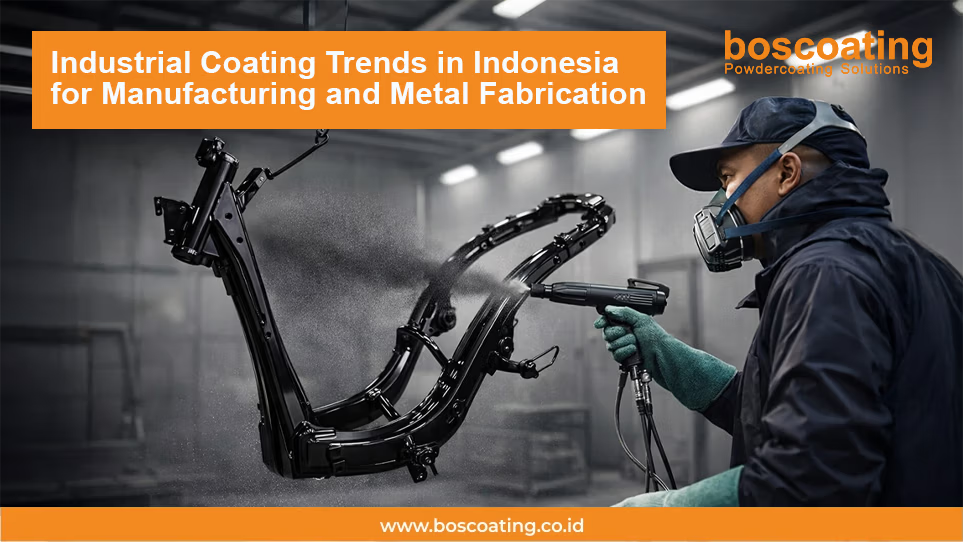
Indonesia’s manufacturing and metal fabrication sectors continue to expand, driven by growth in infrastructure, construction, automotive, and industrial equipment industries. As competition increases and quality standards become stricter, industrial coating in Indonesia is evolving from a simple finishing process into a critical component of product performance and durability. Today, coating is not just about appearance — it plays a strategic role in corrosion protection, operational lifespan, and long-term cost efficiency.
The Growing Importance of Industrial Coating in Indonesia
In modern manufacturing environments, coating systems are designed to deliver multiple performance benefits:
- Corrosion and oxidation resistance
- Protection against humidity and chemical exposure
- Improved mechanical durability
- Enhanced product aesthetics
- Reduced long-term maintenance costs
Given Indonesia’s tropical climate and high humidity levels, protective coating systems are particularly essential for metal-based products. As a result, the coating industry in Indonesia is seeing increased demand for higher-performance and more reliable finishing solutions.
1. Transition from Conventional Paint to Powder Coating
One of the most noticeable shifts in industrial coating in Indonesia is the transition from liquid paint systems to powder coating technologies. Manufacturers prefer powder coating because it offers:
- More consistent film thickness
- Stronger adhesion and impact resistance
- Lower VOC emissions
- A cleaner and more uniform finish
Metal fabricators are increasingly using powder coating for machine frames, electrical enclosures, industrial racks, structural components, and automotive parts.
2. Stronger Focus on Corrosion Protection
Indonesia’s coastal industrial zones and humid climate create aggressive corrosion environments. As a result, manufacturers are prioritizing coating systems that provide long-term protection rather than short-term cost savings. Current trends include:
- Multi-layer coating systems
- Advanced surface pretreatment processes
- Epoxy primers combined with durable top coats
- Stricter corrosion resistance testing standards
Industrial clients are now evaluating coating performance based on lifecycle cost, not just initial application price.
3. Higher Quality Control and Standardization
As supply chains become more integrated, manufacturers demand better consistency and measurable quality standards from coating providers. This includes:
- Controlled coating thickness measurements
- Adhesion and impact testing
- Scratch resistance validation
- Color consistency across production batches
Coating companies that implement structured quality control systems are better positioned to serve long-term industrial partnerships.
4. Production Efficiency and Industrial Capacity
With increasing production volumes, fabrication companies require coating partners capable of supporting industrial-scale operations. Key expectations include:
- Stable oven curing systems
- Efficient workflow and material handling
- Predictable lead times
- Capacity for large or heavy components
The coating industry in Indonesia is gradually shifting toward more organized, process-driven operations to meet these industrial demands.
5. Increasing Attention to Industrial Aesthetics
While durability remains the priority, visual appearance has become more important — especially for products that are visible in commercial or operational environments. Applications where finishing quality matters include:
- Electrical panels and enclosures
- Industrial storage systems
- Commercial machinery
- Exposed structural steel
Consistent color application, matte or textured finishes, and clean detailing contribute to a more professional product image.
The Future of Industrial Coating in Indonesia
Looking ahead, industrial coating in Indonesia is expected to continue developing in several directions:
- Adoption of environmentally friendly technologies
- Greater automation in coating lines
- Expansion of production capacity
- Specialized systems for heavy-duty, marine, and industrial applications
As Indonesia’s manufacturing sector grows more competitive, coating quality will increasingly influence overall product reliability and brand reputation.
Conclusion
The evolution of industrial coating in Indonesia reflects broader changes in the manufacturing landscape. Companies are moving beyond basic finishing solutions toward high-performance systems that improve durability, efficiency, and long-term value. For manufacturers and fabricators, selecting the right coating system — and the right coating partner — is no longer optional. It is a strategic decision that directly impacts product quality and operational success.