Metal Finishing Guide for Hobby and Custom Projects
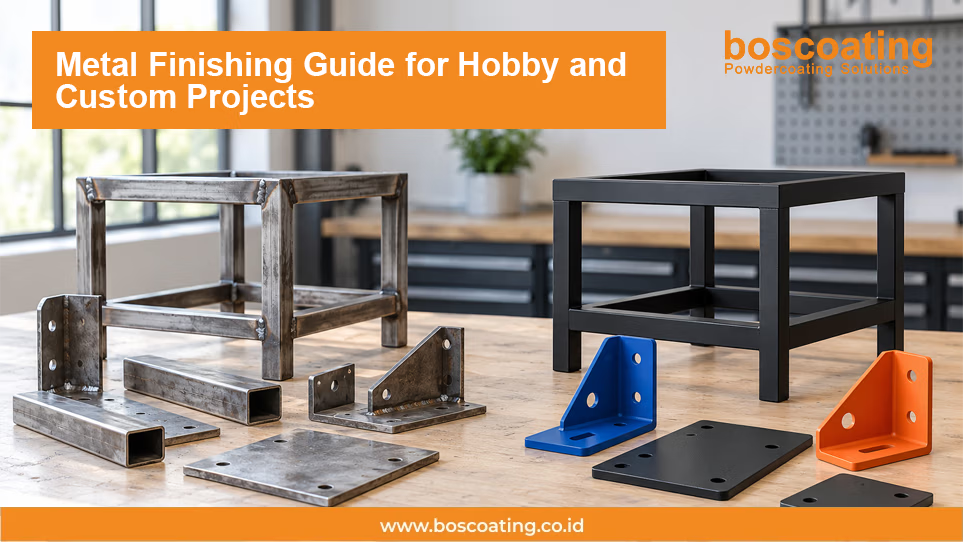
For many people, making something themselves is more than just a way to spend their free time. Hobby projects and custom builds provide an opportunity to create something that may not be available as an off-the-shelf product.
From building simple furniture and workshop equipment to customizing vehicle components and creating decorative metal objects, fabrication is often one of the most enjoyable parts of the process.
However, once cutting, welding, grinding, and fabrication are complete, there is another stage that can have a major impact on the final result: finishing.
The right finish can make a project look cleaner and more professional while also providing protection for the metal surface during everyday use.
Finishing in Hobby and Custom Projects
In a custom project, finishing serves both a design and protective purpose. A metal frame that has been carefully fabricated can look completely different after the right finish is applied. Color, gloss level, and surface texture can significantly change the overall character of a product.
Finishing can also help protect metal from everyday conditions, particularly when the product will be frequently handled, moved, or used in a workshop environment. For this reason, finishing should not simply be treated as the final step after fabrication. Ideally, it should be considered from the beginning of the project.
What Projects Can Use Metal Finishing?
Many types of hobby and custom projects can benefit from metal finishing. Examples include:
- Custom furniture.
- DIY shelving.
- Metal frames.
- Workshop equipment.
- Custom brackets.
- Selected bicycle components.
- Selected automotive parts.
- Decorative metal objects.
- Hobby equipment.
- Custom home accessories.
Every project has different requirements. A custom shelf may need a finish that is easy to clean, while workshop equipment may require greater resistance to frequent use.
Therefore, the finishing system should be selected according to the intended function of the final product.
When Is Powder Coating an Attractive Option?
Powder coating can be considered when a project requires a combination of a clean appearance and surface protection. Some situations where powder coating may be an attractive option include when:
- The product requires a more durable finish.
- Consistent color is important.
- A professional appearance is desired.
- The component is made from a suitable material and can undergo the curing process.
- Multiple components need to have the same color.
Powder coating also offers a wide range of colors and surface finishes, making it suitable for projects with specific visual concepts. However, this does not mean that every custom project is automatically suitable for powder coating.
Not Every Project Is Suitable for Powder Coating
There are several conditions that should be considered before selecting a finishing method. Powder coating may be less suitable for:
- Materials that cannot withstand curing temperatures.
- Certain components with specialized material characteristics.
- Products with extremely tight dimensional tolerances.
- Components already assembled with heat-sensitive non-metal materials.
- Products that exceed the coating facility's capacity.
- Projects that require finishing directly at the installation site.
Some components may also have specific areas that must remain free of coating. For this reason, discussing the design and condition of the components with the coating provider before processing can help prevent problems during final assembly.
Choosing the Material Before Finishing
The material used in a custom project also influences the finishing process. Common metals used for custom projects include:
- Mild steel.
- Stainless steel.
- Aluminium.
- Galvanized steel.
Each material has different surface characteristics and preparation requirements. The condition of the material also needs to be considered. New metal has different preparation requirements compared with an older component that already has rust, paint, or an existing coating. Knowing the material and its condition from the beginning allows the finishing process to be planned more effectively.
Surface Preparation Determines the Final Result
One common mistake in custom projects is assuming that coating can hide every surface imperfection. In reality, the final appearance is heavily influenced by the condition of the metal before coating.
Preparation may include:
- Removing oil and grease.
- Removing rust.
- Removing old coatings.
- Surface preparation or sandblasting.
- Removing weld spatter.
- Smoothing grinding marks.
- Ensuring the surface is ready for coating.
For welded products, fabrication quality is also important. Weld spatter, excessively rough surfaces, or deep grinding marks can remain visible after coating.
A good finishing result starts with a properly prepared surface.
Choosing a Color for a Custom Project
One of the most enjoyable aspects of a custom project is the freedom to choose the color. Black and grey can create a strong industrial character. White can provide a cleaner appearance. Brighter colors can be used as accents to make certain components stand out.
Custom colors can also be selected when a project has a specific visual concept. However, color should not be selected solely based on how it appears on a computer screen or in a catalog. For projects where appearance is particularly important, using a physical sample can help confirm that the selected color matches expectations.
Choosing a Surface Finish
In addition to color, the surface finish also influences the character of a project. Common options include:
- Matte : Creates a softer and more understated appearance.
- Semi-gloss : Provides a balance between a low-reflection and highly reflective surface.
- Gloss : Creates a more polished appearance with stronger light reflection.
- Textured : Provides more visible surface character and can create a stronger industrial appearance.
The most suitable option depends on the concept and function of the project.
Small Details That Are Often Overlooked
In custom projects, small details can become problems once the coating process is complete. Examples include:
- Holes.
- Threads.
- Bearing seats.
- Fitting areas.
- Areas requiring specific clearances.
- Hanging points.
- Sections that must remain free of coating.
If these areas are not considered in advance, the coating may interfere with assembly or installation. For this reason, areas requiring masking should ideally be identified before the product is sent to the coating provider.
From Workshop to Coating Provider
Clear communication with the coating provider can make the process much smoother. Information that should ideally be provided includes:
- Material type.
- Component function.
- Product dimensions.
- Quantity.
- Desired color.
- Surface finish.
- Areas requiring masking.
- Surface condition.
- Expected final appearance.
The clearer the information, the easier it is for the coating provider to determine the appropriate process. For custom projects with special requirements, early communication can also help reduce the possibility of rework.
Tips for a Successful Custom Project
If you are working on a custom project yourself or through a workshop, the following practices can help:
- Don't Wait Until the Product Is Finished : Consider the finishing requirements during the design stage so that difficult-to-coat areas can be addressed before fabrication is complete.
- Complete the Fabrication Work : Welding, drilling, grinding, and other mechanical work should generally be completed before coating.
- Inspect the Surface : Make sure oil, grease, rust, weld spatter, and other contaminants have been addressed according to the coating requirements.
- Use a Sample When Necessary : For specific colors or finishes, a physical sample can help confirm that the result matches the intended design.
- Define Expectations Early : Discuss color, finish, masking, and any special requirements with the coating provider before processing begins.
- Consider Cost and Lead Time : Custom projects often involve smaller quantities than mass production. Therefore, cost, minimum quantities, facility capacity, and lead time should be discussed in advance.
Conclusion
Finishing is an important part of both hobby projects and custom builds. It does not only determine the final appearance but can also help protect metal surfaces during everyday use.
Powder coating can be one option for suitable metal components, particularly when a project requires consistent appearance, a wide range of color choices, and a more durable finish.
However, the success of the process does not depend on the coating alone. Material selection, design, fabrication quality, surface preparation, masking, and communication with the coating provider all play important roles.
By considering finishing from the beginning, a custom project can result in something that is not only unique and personalized but also cleaner in appearance and ready for long-term use.