Powder Coating for Quality Industrial Machine Components
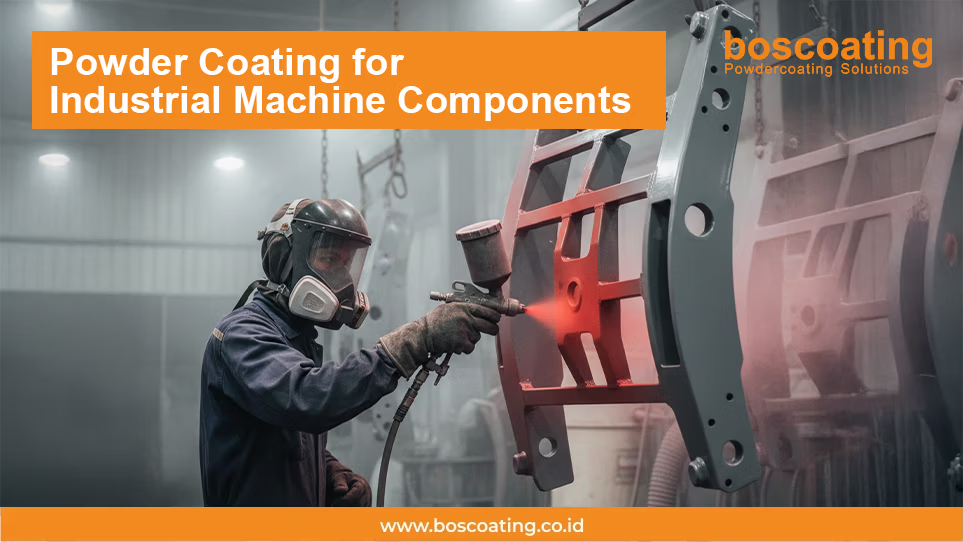
In modern manufacturing, industrial machine components are expected to meet more than just mechanical performance standards. Today, OEM machine parts must also deliver long-term durability, consistent appearance, and a professional finish that reflects the overall quality of the equipment. OEM components are widely used across industrial sectors such as factory automation, conveyor systems, packaging machinery, and assembly lines. Because these parts operate in demanding environments, surface protection becomes essential. One of the most reliable and widely used finishing solutions for industrial machine components is powder coating. In this article, we will explore why powder coating is the preferred finishing method for OEM industrial parts, its key advantages over conventional paint, and how it adds value to machine manufacturing.
What Are OEM Parts in Industrial Manufacturing?
OEM stands for Original Equipment Manufacturer, referring to companies that produce machinery or industrial systems that are supplied to factories, production facilities, and industrial clients. OEM machine parts typically include:
- Brackets and mounting components
- Machine frames and structural parts
- Covers and protective housings
- Electrical enclosures and control boxes
- Safety guarding components
- Base plates and support structures
- Conveyor and automation system parts
Since these components are often produced in large quantities and used for long-term industrial operation, proper finishing plays a critical role in overall product quality.
Why Do Industrial Machine Components Need Powder Coating?
Industrial machine parts are exposed to harsh working conditions. Dust, humidity, friction, handling, and continuous operation can quickly affect untreated metal surfaces. Powder coating provides a protective finish that helps:
- Prevent surface corrosion
- Improve scratch and abrasion resistance
- Deliver a clean and professional appearance
- Maintain consistent color and surface quality across production batches
For OEM manufacturers, finishing is not only about aesthetics—it is part of the machine’s value and durability.
Key Advantages of Powder Coating Over Liquid Paint for OEM Parts
While machine components can be painted using traditional liquid coatings, powder coating offers superior performance in industrial applications.
1. Stronger and Longer-Lasting Surface Protection
Powder coating forms a hard, durable layer after oven curing. Compared to liquid paint, it is significantly more resistant to chipping, peeling, and wear. OEM parts that experience frequent handling or mechanical contact benefit greatly from this durability.
2. Cleaner and More Consistent Finish Quality
Consistency is essential in OEM manufacturing. Powder coating produces a surface finish that is:
- Smooth and uniform
- Free from drips or brush marks
- Highly consistent across multiple production batches
- Visually premium and professional
This makes powder coating ideal for machine components that represent the overall quality of an industrial product.
3. Ideal for Mass Production and Standardization
Powder coating supports industrial production requirements such as:
- Standard RAL color matching
- Consistent coating thickness
- Repeatable results for large-volume OEM supply
This allows manufacturers to maintain strict quality control and meet customer specifications more effectively.
4. High Resistance in Harsh Industrial Environments
OEM machine components often operate in conditions involving:
- Industrial dust and debris
- High humidity
- Temperature variation
- Exposure to oils or mild chemicals
Powder coating provides long-term surface protection in these environments, helping parts remain durable and visually stable.
Common Industrial Machine Parts That Use Powder Coating
Powder coating is widely applied across many types of OEM machine components, including:
1. Machine Frames and Structural Components
Steel machine structures require durable finishing to resist corrosion and mechanical wear.
2. Conveyor System Components
Side frames, brackets, supports, and guiding parts are commonly powder coated for both durability and clean appearance.
3. Electrical Enclosures and Control Panels
Industrial control boxes benefit from powder coating to prevent corrosion and ensure a professional surface finish.
4. Safety Guards and Machine Covers
Protective covers and guarding parts often require strong coating and, in some cases, safety-related color standards.
5. Custom Fabricated OEM Parts
Custom metal housings, mounting plates, and fabricated machine parts are ideal candidates for powder coating.
Color and Finish Options for OEM Machine Components
One of the major advantages of powder coating is the wide range of colors and finishes available. Popular options for industrial machinery include:
- Standard industrial grey (common for machine bodies)
- Matte black for modern industrial design
- Glossy white for clean equipment aesthetics
- Textured finishes for enhanced scratch resistance
- Custom colors to match OEM branding
For machine manufacturers, color can also serve as a product identity and enhance the overall visual appeal in the eyes of customers.
Powder Coating as Added Value for Reliability and Safety
Beyond appearance and durability, powder coating also strengthens surface protection. A high-quality powder coating helps:
- Reduce the risk of corrosion on steel components
- Maintain the structural integrity of components
- Prevent long-term surface damage
In industrial applications, durable components contribute to greater machine reliability and reduced maintenance requirements. However, these benefits should be considered an added value—the primary purpose of powder coating remains delivering a high-quality finish and long-lasting durability for OEM products.
Powder Coating Process for High-Quality OEM Parts
To achieve optimal results for industrial machine components, the powder coating process should follow professional standards, including:
- Surface cleaning and degreasing
- Pretreatment for maximum coating adhesion
- Electrostatic powder application
- Oven curing at the specified temperature
- Quality control, including adhesion testing, coating thickness measurement, and visual inspection
Following these steps ensures a durable, consistent, and high-quality coating that meets the demands of OEM manufacturing.
Tips for Choosing a Powder Coating Provider for OEM Manufacturers
For companies producing industrial machinery or OEM components, selecting the right powder coating provider is essential. A reliable partner should be able to offer:
- Consistent coating quality across production batches
- Capacity to handle small to medium-sized components
- Accurate color matching to industrial specifications
- Quality control for coating thickness and adhesion
- Experience in coating OEM machine components
A professional powder coating provider becomes an integral part of the OEM manufacturing supply chain by ensuring consistent product quality and finishing performance.
Conclusion
Powder coating is one of the most effective finishing solutions for industrial machine components and OEM parts because it provides an ideal combination of:
- High durability
- Professional appearance
- Consistent quality for mass production
- Long-term surface protection
In modern manufacturing, finishing is no longer just about color—it is an essential part of product quality and customer confidence. If your company manufactures industrial machinery, conveyor systems, electrical panel enclosures, or fabricated OEM parts, powder coating is a finishing investment that delivers long-term value and enhances the overall quality of your products.