Powder Coating Standards for Modern Industrial Projects
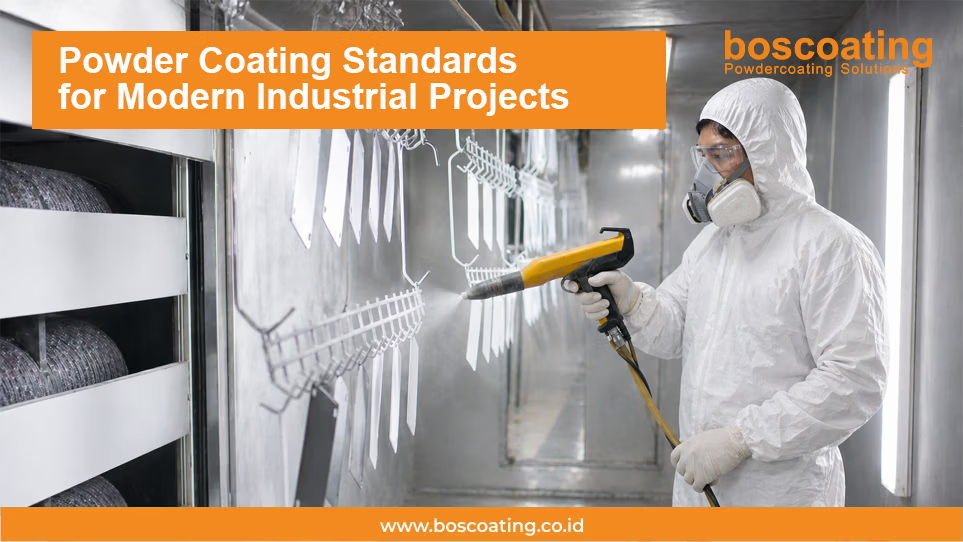
In industrial projects, finishing quality is not just about appearance, but also about standards, consistency, and compliance with technical specifications. Powder coating as one of the modern finishing methods has various standards that are used as a reference to ensure optimal results.
These standards usually refer to international regulations, project specifications, and field application needs.
Understanding Powder Coating Standards
It is crucial to understand powder coating standards, especially for industries such as manufacturing, metal fabrication, and construction that require high quality and consistency.
1. International Standards in Powder Coating
In the global industry, powder coating refers to various international standards used as a technical reference. Some common standards include:
- ISO (International Organization for Standardization)
- ASTM (American Society for Testing and Materials)
- DIN (German Standard)
- JIS (Japanese Industrial Standards)
These standards ensure that the coating results meet internationally recognized quality criteria.
2. Surface Preparation Standards
Surface preparation is a crucial factor regulated by industrial standards. Some common standards include:
- Surface cleanliness level (e.g., Sa 2.5)
- Sandblasting standards
- Chemical pretreatment standards
- Surface free from contamination
Proper surface preparation will enhance coating adhesion and long-term durability.
3. Coating Thickness Standards
Coating thickness is a key parameter regulated by quality standards. Some common standards include:
- Minimum and maximum thickness
- Thickness tolerance
- Compliance with project specifications
- Measurement methods
Standardized thickness will ensure optimal protection without compromising visual quality.
4. Adhesion (Bonding) Standards
Coating adhesion is a critical indicator of quality standards. Common testing methods include:
- Cross-cut test (ASTM D3359)
- Pull-off test
These standards ensure that the coating has sufficient bonding strength to the material surface.
5. Corrosion Resistance Standards
For industrial applications, corrosion resistance becomes a primary standard. Common testing methods include:
- Salt spray test (ASTM B117)
- Duration exposure (hours of testing)
- Corrosion level evaluation
These standards help ensure that the coating can protect materials in challenging environmental conditions.
6. Weather Resistance Standards
For outdoor applications, weather resistance becomes a critical factor. Standards include:
- UV resistance
- Weathering test
- Color retention
- Gloss stability
Testing ensures that the coating remains stable despite exposure to sunlight and outdoor conditions.
7. Visual and Aesthetics Standards
In addition to technical aspects, visual standards are also crucial in industrial projects. Some common parameters include:
- Consistent color
- Level of gloss or matte finish
- Surface free from defects
8. Curing Process Standards
The curing process also has standards that must be met to produce optimal coating results. Parameters include:
- Curing temperature
- Curing time
- Heat distribution
- Consistency of the process
Proper curing standards will yield a strong and durable coating.
9. Quality Control (QC) Standards
Quality control is a critical aspect in ensuring that all processes meet set standards. QC steps include:
- Incoming material inspection
- In-process inspection
- Final inspection
- Technical testing
A good QC system ensures consistent quality coating results.
10. Project-Specific Specifications
Each industrial project has its own unique specifications and standards. These specifications cover:
- Client requirements
- Technical data sheets
- Engineering specifications
- Acceptance criteria
Standards serve as the primary reference for determining whether coating results are acceptable or not.
11. Documentation and Traceability Standards
In industrial projects, documentation is also an essential aspect of standards. Common documents include:
- Coating result reports
- Test certificates
- Material traceability
- Process documentation
12. Safety and Environmental Standards
Standards for safety and the environment are also non-negotiable aspects of powder coating processes. These standards cover:
- K3 (Occupational Health and Safety) regulations
- Environmental regulations
- Emissions and safety standards
- Waste management
Standards ensure that the coating process is conducted safely and responsibly.
Conclusion
Powder coating standards for industrial projects encompass various aspects, from surface preparation to quality control and documentation. By following proper standards, coating results can achieve:
- Consistent quality
- Optimal durability
- Compliance with project specifications
- Client trust
In today's industry, compliance with standards is not just a choice but a necessity to ensure quality and credibility.
For powder coating industrial needs in Surabaya and Sidoarjo, Boscoating is ready to be your partner that prioritizes standards, quality, and consistency in every project.