Powder Coating vs Galvanizing for Corrosion Protection
In the manufacturing and construction industries, corrosion protection is a critical factor in ensuring the durability and longevity of metal components. Exposure to moisture, air, and harsh environments can significantly reduce the lifespan of metal products and increase maintenance costs.
Two of the most commonly used methods for protecting metal surfaces are powder coating and galvanizing. Each method offers distinct advantages, and the right choice depends on the specific application and environmental conditions.
What Is Powder Coating?
Powder coating is a finishing process in which dry powder is applied electrostatically to a metal surface and then cured under heat to form a hard, uniform protective layer. In addition to providing corrosion resistance, powder coating offers a wide range of color and texture options, making it suitable for applications where both protection and aesthetics are important.
What Is Galvanizing?
Galvanizing is a process that applies a protective zinc coating to metal surfaces to prevent corrosion. The most common method is hot-dip galvanizing, where steel or iron is immersed in molten zinc. The zinc layer acts as a protective barrier and also provides sacrificial protection, meaning it corrodes in place of the underlying metal.
Key Comparison: Powder Coating vs Galvanizing
1. Corrosion Protection
Galvanizing is highly effective in preventing corrosion, especially in outdoor and high-humidity environments. Its sacrificial protection mechanism makes it particularly reliable even when the surface is damaged. Powder coating provides corrosion resistance primarily as a barrier coating. Its effectiveness depends heavily on proper surface preparation and application quality.
2. Weather and Environmental Resistance
For harsh environments such as coastal areas or heavy industrial settings, galvanizing generally performs better due to its strong resistance to aggressive corrosion conditions. Powder coating is more suitable for indoor or semi-outdoor applications, although it can be used outdoors when applied with proper systems and preparation.
3. Resistance to Scratches and Impact
Powder coating offers better resistance to scratches and minor impacts due to its harder and more uniform surface layer. Galvanized coatings are more focused on corrosion protection and may not provide the same level of surface smoothness or scratch resistance as powder coating.
4. Appearance and Aesthetics
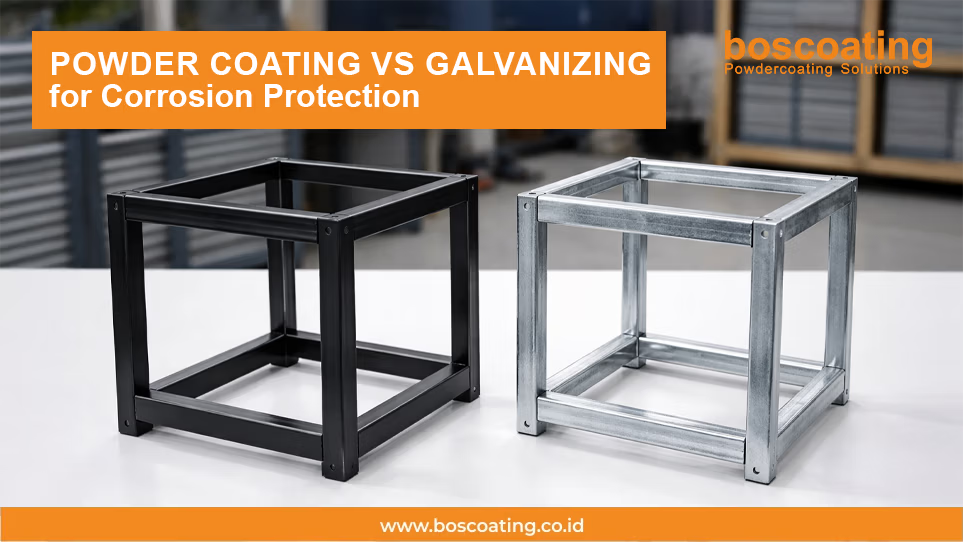
In terms of appearance, powder coating is clearly superior. It offers a wide range of colors, finishes, and textures, making it ideal for applications where visual quality matters. Galvanizing typically results in a matte grey metallic finish, which is more functional than decorative.
5. Coating Thickness
Galvanized coatings are generally thicker, providing stronger long-term protection in corrosive environments. Powder coating has a more controlled and uniform thickness, but it is typically thinner compared to galvanizing in extreme protection applications.
6. Service Life
Galvanizing often provides a longer service life in harsh outdoor environments, especially with minimal maintenance. Powder coating can also offer long-lasting performance in suitable conditions, particularly when applied with proper preparation and coating systems.
Process Comparison
From a process perspective, galvanizing involves immersing metal components in molten zinc, making it suitable for certain types of structures and simpler geometries. Powder coating is more flexible in handling complex shapes and detailed components. However, it requires proper pretreatment to ensure strong adhesion and durability.
Cost Consideration
In terms of cost, galvanizing is often more economical for long-term corrosion protection in harsh environments. Powder coating provides added value in terms of appearance and finishing quality, and can reduce maintenance costs in applications where aesthetics and surface durability are important. Choosing between the two should involve evaluating both initial cost and long-term performance.
When to Use Powder Coating
Powder coating is more suitable for:
- Applications requiring high aesthetic quality
- Indoor or semi-outdoor environments
- Components with detailed or complex designs
- Commercial and fabrication projects
- Products that require consistent and clean finishing
When to Use Galvanizing
Galvanizing is more appropriate for:
- Outdoor structures
- Highly corrosive environments
- Coastal or high-humidity areas
- Heavy-duty construction
- Applications where protection is prioritized over appearance
Combining Both: Duplex System
In some cases, powder coating and galvanizing can be combined into a duplex system. This system applies powder coating over a galvanized surface, providing:
- Enhanced corrosion protection
- Improved aesthetic appearance
- Extended service life
Duplex systems are often used in demanding outdoor applications where both durability and visual quality are required.
Conclusion
Both powder coating and galvanizing offer effective corrosion protection, but each has its own strengths. There is no single solution that fits all applications. Powder coating is ideal when appearance and finishing quality are priorities, while galvanizing is better suited for maximum corrosion resistance in harsh environments. Selecting the right method depends on the application, environmental exposure, and long-term performance requirements.