Why Powder Coating Peels Causes and Prevention Guide
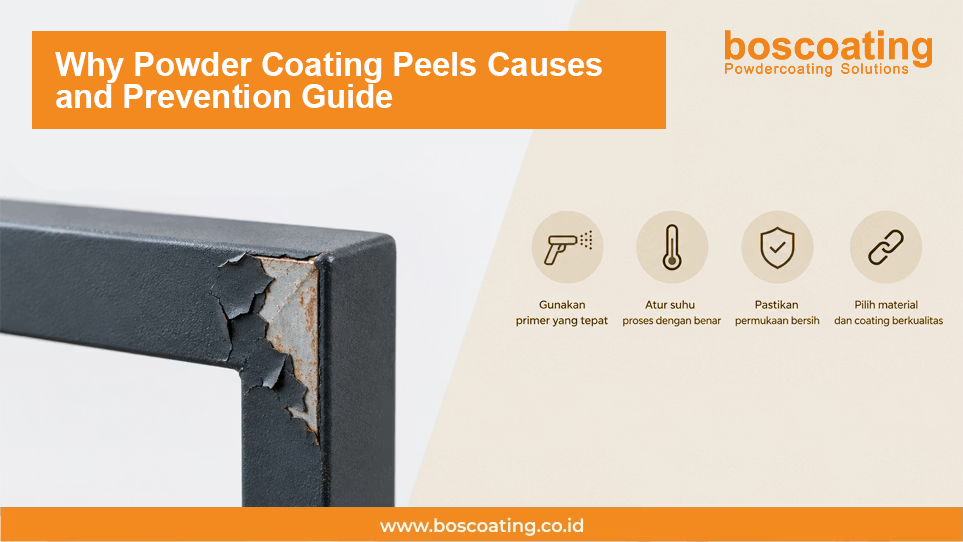
Powder coating is known as a finishing method used to provide a protective layer as well as an aesthetic appearance for various metal components. The result can deliver a neat surface, consistent color, and good durability for various needs.
However, under certain conditions, the powder coating layer may experience problems such as cracking, peeling, blistering, or even detaching from the metal surface.
When this happens, the problem is not always caused by the powder coating material itself. There are many factors that can affect the adhesion and durability of the coating, ranging from the surface condition prior to coating to the application process and environmental conditions after coating.
So, why does powder coating peel off?
What Does Peeling Powder Coating Mean?
Powder coating peels off when the layer attached to the metal surface loses its adhesion, causing part or all of the layer to lift away from the material.
Peeling can manifest in several forms. In the early stages, it might only appear as a small raised area or crack. If left unaddressed, the damage can spread and leave the underlying metal surface exposed.
When the metal surface becomes exposed, the risk of rust and corrosion appearing increases, especially if the component is in a humid environment or frequently exposed to water.
1. Surface Preparation Was Not Carried Out Properly
One of the most common causes of powder coating peeling easily is an unprepared surface condition prior to the application process.
The metal surface needs to be in a suitable condition so that the coating can adhere properly. Oil, dust, dirt, residual oxidation, rust, or other remaining contaminants can interfere with the adhesion process.
Imagine powder coating as a layer that must adhere directly to the surface of the material. If there is still dirt or contaminants between them, the bond of the layer will not be optimal.
Therefore, surface preparation is one of the most critical steps in producing high-quality powder coating.
This is also closely related to Factors Affecting the Final Result of Powder Coating.
2. Rust or Surface Oxidation Was Not Addressed
Powder coating should not be used simply to cover up a surface that is already rusted. If rust remains under the layer, damage can continue to develop in that area. The layer above it then risks losing adhesion and experiencing peeling.
Because of this, components that have experienced rust must receive surface treatment first before entering the coating process. The goal is not only to make the surface look clean, but also to ensure the material is in a more suitable condition to receive the new coating.
3. The Surface Still Contains Oil or Contaminants
Oil and grease are frequently found on metal components, especially on items originating from fabrication, machining, or prior usage. If these contaminants are not cleaned thoroughly, the powder coating can experience adhesion issues.
Initially, the finishing result may look good. However, after being used or exposed to certain environments, contaminated areas may begin to show signs of damage. This is why the cleaning and degreasing process should never be considered a simple stage in powder coating.
4. The Curing Process Was Not Optimal
After the powder is applied, the coating needs to go through a curing process to properly form the layer.
Suboptimal curing can affect the characteristics and performance of the layer. Inappropriate process conditions can prevent the coating from achieving its intended properties, including adhesion and durability.
Therefore, the curing process needs to be properly controlled, including adjusting the process to match the type of powder and the characteristics of the coated component.
5. Coating Thickness Is Inappropriate
Coating thickness can also be related to the risk of powder coating experiencing issues. A layer that is too thin may offer inadequate protection for application needs. Conversely, a layer that is too thick is not necessarily better and can cause problems with the final appearance as well as coating performance.
Because of this, coating thickness needs to be controlled and adjusted to the application requirements. Further discussion on this topic can be found in The Effect of Powder Coating Thickness on Durability.
6. The Type of Powder Coating Does Not Match the Usage
Every component has different usage conditions. Some products are used indoors, some are placed outdoors, and others are exposed to humidity, sunlight, water, or specific environmental conditions.
If the type of powder coating does not match the usage conditions, the layer can experience a faster decline in performance.
Therefore, selecting a powder coating should not be based solely on color or final appearance. Environmental conditions and component functionality must also be considered.
7. The Operating Environment Is Too Harsh
After the coating is applied, the layer will continuously face its surrounding environment. Exposure to water, high humidity, weather changes, sunlight, certain chemicals, friction, and impacts can affect the coating condition in the long run.
In more challenging environments, surface protection systems need to be chosen more precisely.
A humid environment, for example, can increase the risk of corrosion if the layer suffers damage or has parts that are not properly protected. How Powder Coating Protects Material in Humid Environments can serve as a reference to understand the relationship between coating and environmental conditions.
8. The Layer Experiences Scratches or Impacts
Not all peeling originates from coating process errors. A layer that was initially good can also be damaged through use. Impacts with hard objects, continuous friction, or scratches can damage the coating surface.
When damaged areas are not addressed immediately, those spots can become the starting point for broader damage. Therefore, the coating condition needs to be inspected, especially on components that frequently experience physical contact.
9. Old Coating Is Used as a Base Without Proper Preparation
During repair or refinishing processes, the old surface needs to be inspected first. An old layer that has suffered damage, lost adhesion, or contains contamination cannot always be used directly as a base for the next layer.
If the base layer is already problematic, the new layer may experience the same issues. Therefore, the surface condition before refinishing needs to be evaluated thoroughly.
10. Component Shape and Hard-to-Reach Areas
The shape of a component can also affect the coating process.
Corners, crevices, joints, internal structures, and complex shapes may require extra attention during the application process. If the layer is not formed evenly in certain areas, protection in those parts may differ compared to other areas.
This is one reason why every component needs to be processed with its shape and surface characteristics in mind.
Does Peeling Powder Coating Always Mean Bad Powder Quality?
Not necessarily.
When seeing a coating peel off, many people immediately conclude that the powder material used was of poor quality. In reality, the problem can stem from various stages.
Simply put, the final quality of powder coating is influenced by a sequence of processes:
Material condition → Surface preparation → Powder selection → Application → Thickness → Curing → Operating conditions → Maintenance
This means that using good powder alone is not enough if the other stages are not carried out properly.
How to Prevent Powder Coating from Peeling?
Prevention needs to start before the coating process begins.
First, ensure the material surface is completely ready and free from dirt, oil, rust, and other contaminants.
Second, choose the type of powder coating based on usage requirements and environmental conditions.
Third, control the application and curing processes so that the layer forms properly.
Fourth, ensure the coating thickness matches the requirements and application specifications.
Finally, protect components from impacts, scratches, and environmental conditions that can accelerate layer degradation.
With this approach, the risk of coating failure can be reduced.
What Should Be Done If Powder Coating Has Already Peeled Off?
Do not simply cover up the peeling area with a new layer.
First, find out the root cause of the damage. Does it originate from corrosion, mechanical damage, poor surface preparation, curing process issues, or environmental conditions?
Once the cause is identified, the damaged area needs to be re-prepared before performing the next finishing process.
Proper handling is essential because recoating without resolving the initial cause can make the same problem recur.
Relationship Between Peeling and Coating Service Life
Peeling is one sign that the coating condition is no longer optimal.
However, the service life of a coating is not determined solely by when the layer starts to look damaged. Environment, surface condition, type of coating, thickness, and usage method can all affect its performance.
Discussion on these factors can be found in the article Coating Service Life and Its Impact on Product Quality.
Conclusion
Powder coating can experience peeling due to various reasons. The problem does not always stem from powder quality, but can relate to surface preparation, rust, contamination, curing process, coating thickness, powder type selection, environmental conditions, and usage damage.
Therefore, producing long-lasting powder coating requires attention to the entire process, not just the powder application stage.
With proper surface preparation, appropriate coating selection, correct application and curing processes, and post-coating maintenance, the risk of peeling can be reduced and layer performance can be better maintained.
For those needing powder coating solutions for various metal components, Boscoating can help determine the appropriate finishing process based on material characteristics and application needs.