Powder Coating Durability in Indonesian Tropical Climate
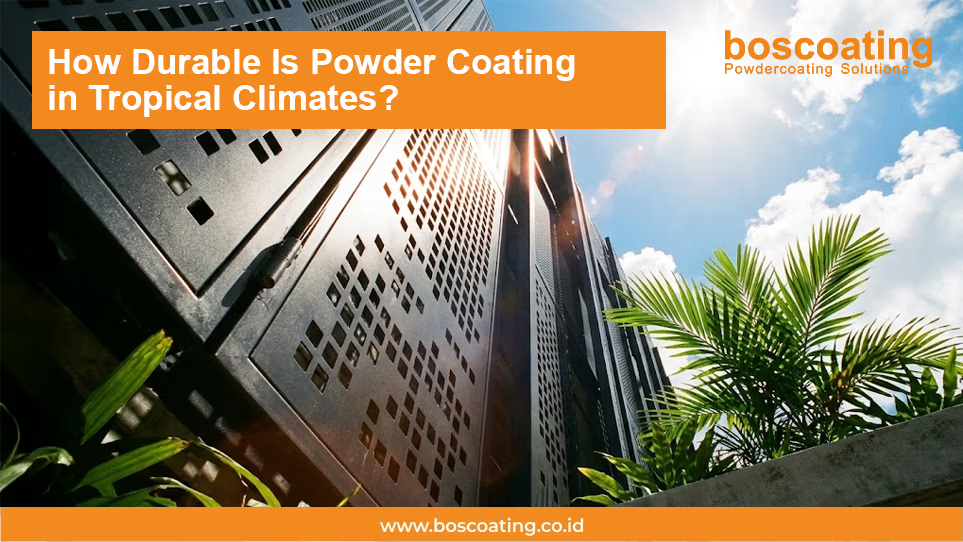
How Durable Is Powder Coating in Tropical Climates?
Indonesia’s tropical climate is characterized by high temperatures, relatively high humidity, frequent rainfall, and continuous exposure to sunlight throughout the year. These conditions create specific challenges for metal materials, particularly in terms of corrosion resistance and surface durability.
In many industrial, construction, and architectural applications, powder coating is widely used as a finishing solution. However, a common question arises: how well does powder coating perform under tropical weather conditions?
Challenges of Tropical Environments for Metal
Tropical climates are not always extreme, but they combine several factors that can gradually affect metal surfaces over time, such as:
- Relatively high humidity
- Prolonged UV exposure
- Repeated cycles of rain and heat
- Potential water accumulation in certain areas
- Varying environmental conditions (urban, industrial, coastal)
Without proper protection, metal components may experience gradual degradation and corrosion.
How Powder Coating Works
Powder coating functions as a barrier coating, protecting metal surfaces by isolating them from direct contact with air, moisture, and contaminants. Through electrostatic application and curing in an oven, powder coating forms a layer that is:
- Dense and uniform
- Strongly bonded to the surface
- Resistant to minor scratches
- More stable than conventional liquid paint
Under many conditions, powder coating provides reliable protection for use in tropical environments.
Powder Coating Performance Under Tropical Conditions
Powder coating can be used in tropical climates, but its durability depends on environmental exposure and the quality of the coating system applied.
1. Resistance to Humidity
Powder coating performs well under normal humidity conditions, particularly in indoor and semi-outdoor applications. In higher humidity environments, such as open outdoor areas or locations near coastal regions, it can still perform effectively for a certain period. However, like most coating systems, its performance will gradually decline over time, especially if the coating layer is damaged. In other words, powder coating is suitable for tropical climates, but its service life depends on the level of environmental exposure.
2. Corrosion Protection
As a barrier coating, powder coating protects metal by limiting direct exposure to air and moisture. This level of protection is sufficient for many general applications. However, in more aggressive environments, zinc-based systems such as galvanizing offer stronger long-term corrosion resistance.
3. UV Resistance
For outdoor use, polyester-based powder coatings offer good resistance to UV exposure. In regions with intense sunlight, such as Indonesia, the quality of the powder material plays a significant role in maintaining color stability over time.
4. Resistance to Rain and Water Exposure
Powder coating can withstand exposure to rain under normal conditions. However, in areas with continuous water exposure or water pooling, coating performance may gradually decrease, as is the case with most protective systems.
5. Resistance to Temperature Changes
In tropical climates with alternating heat and rain cycles, powder coating remains relatively stable, provided that the application and curing processes are properly executed. Daily temperature variations are generally less critical compared to humidity and environmental exposure.
Indoor vs Semi-Outdoor vs Outdoor Performance
In practice, powder coating performance varies depending on where it is used:
- Indoor: highly stable with minimal corrosion risk
- Semi-outdoor: performs well with moderate exposure
- Full outdoor: still applicable, but service life depends on environmental conditions and coating quality
The higher the exposure level, the more important it is to select the appropriate coating system.
Service Life in Tropical Conditions
There is no fixed service life for powder coating, as it depends on several factors:
- Environmental conditions
- Surface preparation quality
- Type of powder coating used
- Coating thickness
- Application process quality
Under normal conditions, powder coating can last for many years. However, in more aggressive environments, gradual degradation is expected over time.
When Powder Coating Is Sufficient — and When Other Systems Are Needed
Powder coating is a suitable solution for many applications, particularly:
- Indoor environments
- Semi-outdoor applications
- Outdoor areas with moderate exposure
- Products requiring good aesthetic finishing
However, in more demanding conditions such as:
- Coastal areas with high salt content
- Extremely high humidity environments
- Industrial zones with chemical exposure
- Structures requiring long-term protection with minimal maintenance
It may be necessary to consider alternative or additional systems, such as galvanizing or duplex coating systems. This approach ensures that the selected protection method aligns with actual field conditions.
Conclusion
Powder coating offers reliable performance in tropical climates and is suitable for a wide range of industrial, commercial, and architectural applications.
However, like any coating system, its performance is not absolute. Durability depends on environmental exposure, material quality, and application processes.
With the right specifications and proper understanding of usage conditions, powder coating can provide an effective balance between protection, durability, and professional appearance over the long term.