Classic Motorcycle Restoration Using Durable Powder Coating
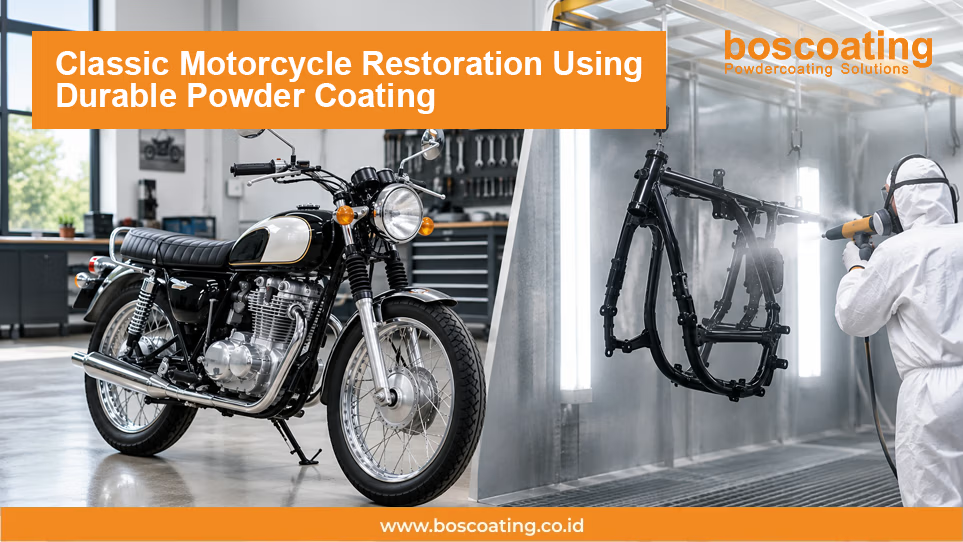
Restoring a classic motorcycle is not simply about making the bike look new again. For many owners, restoration is about bringing back the character, details, and appearance of a motorcycle that may be several decades old.
Over time, metal components can develop rust, scratches, peeling paint, or discoloration. Some parts may have also been repainted or repaired several times by previous owners.
In this situation, finishing becomes an important part of the restoration process. Powder coating can be one finishing option for selected metal components, particularly when a clean, consistent, and durable finish is desired.
However, not every motorcycle component is suitable for powder coating. Component selection, surface preparation, color, and application requirements all need to be considered carefully.
Why Is Finishing Important in Classic Motorcycle Restoration?
In a restoration project, the final appearance has a major influence on the character of the motorcycle. A frame with a rough surface, uneven old paint, or visible corrosion can reduce the overall visual quality even when the other components have been carefully restored.
Finishing also serves a protective purpose. Metal components on a motorcycle can be exposed to moisture, dust, water, and everyday use. The right finishing system can therefore help:
- Improve the appearance of the surface.
- Protect the underlying metal.
- Create a more consistent color.
- Reduce the risk of corrosion.
- Provide a cleaner final appearance.
However, classic motorcycle restoration has one additional consideration: originality. Not every component needs to look modern or completely new. In some cases, the original character of a motorcycle is an important part of the restoration itself.
Powder Coating in the Restoration Process
Powder coating is one finishing method that can be considered for selected metal components. The process involves applying powder coating material to the metal surface and then curing it to form a finished coating layer.
For classic motorcycle restoration, this method can offer several benefits, including:
- Consistent color.
- Clean surface appearance.
- Good resistance for everyday use.
- Various color and finish options.
- Suitability for many fabricated metal components.
However, powder coating should not be treated as a universal solution for every motorcycle part. Each component should first be evaluated based on its material, function, dimensions, tolerances, and condition.
Motorcycle Components That May Be Suitable
Some metal components that may be considered for powder coating include:
- Frames.
- Swing arms.
- Brackets.
- Footrests.
- Stands.
- Certain handlebar components.
- Selected wheel-related metal components.
- Small metal parts.
Suitability will still depend on the material and design of each component. Even a relatively simple-looking component on a classic motorcycle may have specific mechanical functions or dimensional requirements. Therefore, the decision to coat a part should ideally be made after the component has been inspected.
Not Every Component Is Suitable for Powder Coating
One important consideration during restoration is that powder coating is not suitable for every motorcycle component. Some parts have very precise tolerances. Adding a coating layer to certain areas may affect how the component fits or functions.
This can apply to:
- Areas with tight dimensional tolerances.
- Certain holes and threads.
- Bearing seats.
- Seal mounting areas.
- Components made from materials that are sensitive to curing temperatures.
- Parts with specialized functions.
These areas may need to be protected with masking or finished using another method.
Therefore, the more appropriate question is not simply whether a component "can be painted," but whether it is suitable for powder coating without affecting its function or dimensions.
Inspect the Components Before Restoration
Before sending components for coating, their condition should be inspected carefully. Classic motorcycle parts can develop various problems due to age and use, including:
- Rust.
- Old paint.
- Oil and grease.
- Dirt.
- Scratches.
- Impact damage.
- Uneven surfaces.
- Previous welding or repair marks.
These conditions should be identified before coating begins. Powder coating is not intended to repair structural damage or correct fabrication problems. If a frame or component requires repair, that work should be completed before the coating process.
Preparing Components Before Coating
Preparation is one of the most important stages of the restoration process. Components should generally be removed from the motorcycle and cleaned of contaminants before coating.
Preparation may include:
- Disassembly : Components are removed from the motorcycle so they can be processed individually.
- Cleaning and Degreasing : Oil, grease, and dirt must be removed from the surface.
- Old Coating Removal : Existing paint or damaged coating should be removed where necessary.
- Surface Preparation : The metal surface is prepared to receive the new coating.
- Sandblasting : This may be used depending on the condition of the material and the required surface preparation.
- Inspection : Components are checked for damage, cracks, or areas requiring repair.
- Masking : Areas such as threads, bearing seats, or specific holes may need to be protected from coating.
The better the preparation, the greater the chance of achieving a clean and consistent final finish.
Preserving the Character of a Classic Motorcycle
Restoring a classic motorcycle does not necessarily mean using the most modern or visually striking colors. One important question is: how closely should the restored motorcycle resemble its original appearance?
If the goal is to restore the motorcycle as closely as possible to its original condition, the color and finish should be selected based on references from the particular model and production era. On the other hand, if the project is intended to become a custom build, the owner has greater freedom to choose different colors and finishes.
Both approaches are valid. The important thing is to establish the restoration concept early so that the finishing choices support the overall direction of the project.
Choosing Color and Surface Finish
Color has a major influence on the character of a motorcycle after restoration. Some common options for metal components include:
- Black.
- Grey.
- Silver.
- OEM-inspired colors.
- Custom colors.
Surface finish should also be considered. A matte finish can create a more understated appearance, while a gloss finish provides a more polished look. Semi-gloss can offer a balance between the two.
However, color should not be selected based solely on a small sample. The final color on a component installed on the motorcycle may appear different because of the component's shape, lighting conditions, and the colors of surrounding parts.
Fabrication Quality Still Matters
For components such as motorcycle frames, fabrication quality has a significant influence on the final coating result. Weld spatter, grinding marks, rough surfaces, or poorly finished joints can remain visible after coating.
Because powder coating follows the contours of the metal underneath, it is not intended to hide fabrication defects. Before coating, it is therefore important to ensure that:
- Welding is complete.
- Weld spatter has been removed.
- Grinding has been properly completed.
- Surfaces are adequately smooth.
- Repairs have been completed.
- Areas that must remain free of coating have been identified.
For restoration projects, these small details can make a significant difference to the final appearance.
Powder Coating or Preserving the Original Finish?
Not every classic motorcycle component needs to be powder coated. For some restoration projects, preserving an original finish may be more important than replacing it with a new one.
Several factors can be considered:
- How important is originality?
- Is the component still in good condition?
- Does it have significant corrosion?
- Can the existing finish be preserved?
- Will the motorcycle be used regularly or kept primarily as a collection piece?
- Is the project intended as an original restoration or a custom build?
Considering these factors allows the owner to determine which components should be refinished and which should remain as they are.
What Should Be Checked After Coating?
Once the coating process is complete, components should be inspected before being reassembled. Pay particular attention to:
- Color consistency.
- Coating coverage.
- Masked areas.
- Visible surface defects.
- Holes and threads.
- Mounting areas.
Assembly should also be carried out carefully to prevent scratching or damaging the newly finished surface. Using the appropriate tools and installation methods is especially important for components with freshly coated surfaces.
Conclusion
Restoring a classic motorcycle involves more than simply replacing old paint with a new finish. Every component should be evaluated based on its condition, function, material, and the overall restoration concept.
Powder coating can be a suitable finishing option for selected metal components, such as frames, swing arms, brackets, stands, and various small metal parts. However, not every component is suitable, particularly parts with precise tolerances or materials that are incompatible with the curing process.
Surface preparation, masking, fabrication quality, color selection, and the overall restoration concept all contribute to the final result.
Ultimately, a successful restoration is not simply about making a motorcycle look new. It is about making every component look right for the character of the motorcycle being brought back to life.