Differences ISO 3864 OSHA and K3 Standards for Safety Colors
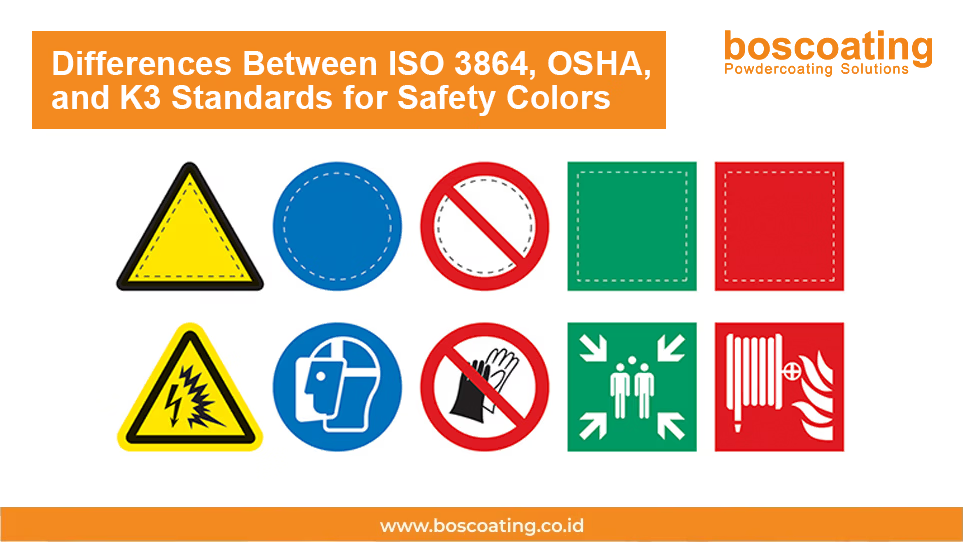
In industrial environments, color serves more than just an aesthetic purpose—it is a critical part of the workplace safety communication system. Safety colors are used to provide warnings, indicate safe conditions, identify emergency equipment, and communicate mandatory instructions to workers. To ensure consistency and universal understanding, the use of safety colors is regulated by several standards, including ISO 3864, OSHA, and the Indonesian K3 Standards.
Although all three share the same objective of improving workplace safety, they differ in terms of scope, application, and regulatory framework. Understanding these differences helps companies implement appropriate safety systems while ensuring that products such as hydrant boxes, guarding fences, safety barriers, and handrails are finished with the correct colors according to recognized standards.
In this article, we will discuss the differences between ISO 3864, OSHA, and the Indonesian K3 Standards, along with their practical applications in industrial environments.
Why Are Safety Color Standards Important?
In production areas, warehouses, construction sites, and public facilities, workers need to recognize safety information instantly through visual cues. A standardized color system enables faster decision-making during both routine operations and emergency situations.
Implementing standardized safety colors provides several benefits, including:
- Reducing workplace accidents.
- Making hazardous areas easier to identify.
- Supporting faster emergency evacuation.
- Standardizing safety systems throughout the workplace.
- Improving compliance with occupational safety regulations.
Without clear standards, inconsistent color usage may create confusion and increase the risk of accidents.
What Is ISO 3864?
ISO 3864 is an international standard published by the International Organization for Standardization (ISO). It defines the principles for designing safety signs, including colors, shapes, symbols, and safety markings. The primary objective of ISO 3864 is to establish a universal visual communication system that can be understood regardless of language.
The main safety colors defined by ISO 3864 include:
- Red for prohibition signs and fire protection equipment.
- Yellow for hazard warnings.
- Green for safe conditions, emergency exits, and first aid.
- Blue for mandatory actions.
ISO 3864 is widely adopted by multinational companies because it is internationally recognized and supports consistent safety practices across different countries.
What Is OSHA?
OSHA (Occupational Safety and Health Administration) is the occupational safety authority in the United States responsible for issuing workplace safety regulations.
Regarding safety colors, OSHA provides guidance on the use of colors for:
- Industrial machinery.
- Internal traffic lanes.
- Fire protection equipment.
- Hazardous areas.
- Safety signs.
Most OSHA safety colors follow principles that are similar to ISO 3864. However, OSHA places greater emphasis on workplace regulatory compliance rather than the design specifications of safety symbols.
For example:
- Red is used for emergency situations and fire protection equipment.
- Yellow is used to warn of physical hazards.
- Green is used for safety facilities such as first aid stations.
- Blue is used for information or mandatory instructions.
What Are the Indonesian K3 Standards?
In Indonesia, the implementation of safety colors refers to various Occupational Safety and Health (K3) regulations issued by the government, including workplace safety guidelines and several national standards that adopt international practices.
In practice, many companies in Indonesia implement a combination of:
- Ministry of Manpower regulations.
- Indonesian National Standards (SNI).
- ISO 3864 as the international reference.
- Customer or project-specific requirements.
As a result, the application of safety colors in Indonesia is generally consistent with international standards, particularly in manufacturing, oil and gas, mining, and logistics industries.
Differences Between ISO 3864, OSHA, and K3 Standards
Although these standards share many similarities, each has a different focus.
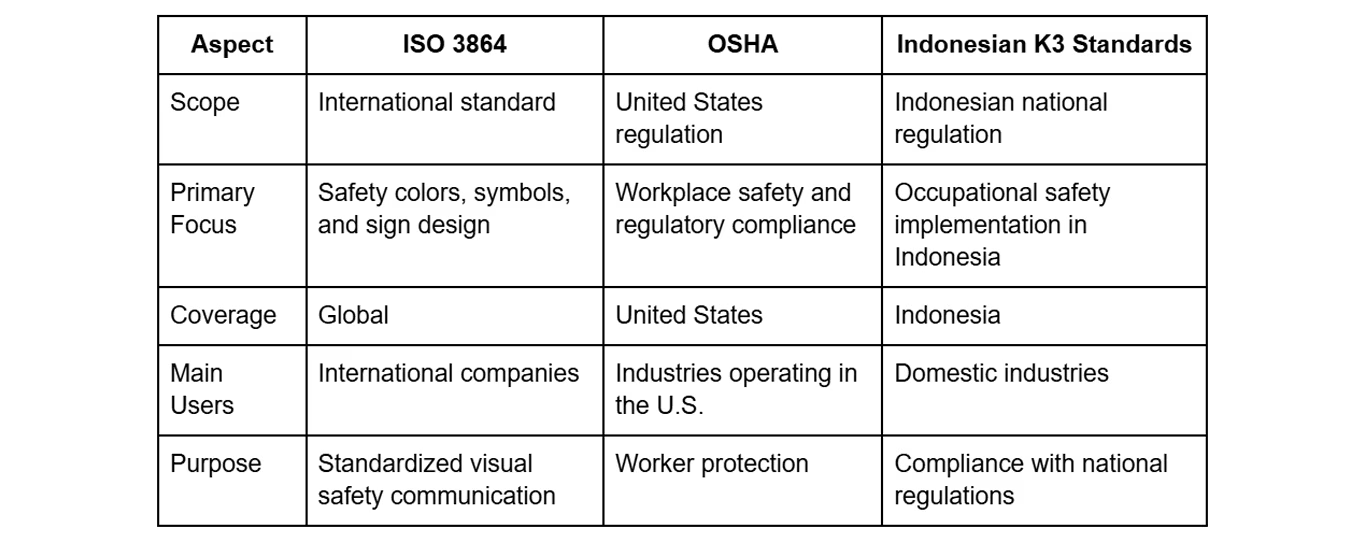
In general, many companies in Indonesia adopt ISO 3864 because international standards are commonly required for industrial projects.
Similarities Among the Three Standards
Despite differences in regulatory scope, all three standards share several fundamental principles.
1. Red
Used for:
- Fire extinguishers (APAR)
- Hydrant boxes
- Fire cabinets
- Emergency stop buttons
2. Yellow
Used for:
- Guarding fences
- Safety barriers
- Hazardous machine areas
- Forklift lanes
3. Green
Used for:
- Emergency evacuation routes
- Assembly points
- First aid kits
- Emergency showers
4. Blue
Used for:
- Mandatory PPE areas
- Safety instructions
- Mandatory information signs
These similarities allow workers from different countries to recognize and understand safety colors quickly.
Why Is Powder Coating Important for Safety Colors?
Choosing the correct safety color is only part of the process. Safety colors must also remain visible and durable under various environmental conditions to ensure long-term effectiveness. This is where powder coating provides significant advantages.
Some of the key benefits of powder coating for safety equipment include:
- More Consistent Colors : Powder coating delivers uniform color across every product, helping companies maintain consistency in their workplace safety systems.
- Corrosion Resistance : Products such as hydrant boxes, safety barriers, and guarding fences are often installed in humid or outdoor environments. Powder coating provides excellent protection against rust and corrosion.
- Fade Resistance : Powder coating offers excellent resistance to UV exposure and weather conditions, allowing safety colors to remain bright and clearly visible for years.
- Impact Resistance : Safety equipment is frequently exposed to impacts during daily operations. Powder coating helps maintain a durable finish that resists chipping and peeling.
- Professional Appearance : In addition to protecting metal surfaces, powder coating produces a smooth, high-quality finish that enhances the professional appearance of industrial safety equipment.
Industrial Products That Commonly Use Safety Colors
Many metal products that undergo powder coating include:
- Hydrant boxes
- Fire cabinets
- Guarding fences
- Safety barriers
- Bollards
- Handrails
- Machine safety fences
- Emergency cabinets
- Electrical panels
- Area boundary posts
These products require both standardized safety colors and durable protective coatings.
Choosing a Powder Coating Service for Safety Equipment
If your company manufactures metal safety equipment, make sure you choose a powder coating service provider that offers:
- Consistent colors that meet safety standards.
- High-visibility color options.
- Excellent resistance to corrosion and weather.
- Smooth and uniform finishing.
- Production capacity suitable for industrial-scale projects.
With the right powder coating process, safety equipment will not only look professional but also maintain its visual effectiveness for many years.
Conclusion
ISO 3864, OSHA, and the Indonesian K3 Standards all share the same goal: creating safer workplaces through standardized safety color systems that are easy to recognize and understand. Their main differences lie in their regulatory scope and areas of application, while the meanings of key colors such as red, yellow, green, and blue remain largely consistent.
To ensure that safety colors remain highly visible and durable over time, the finishing process is equally important. Powder coating is an ideal solution because it delivers consistent colors, excellent corrosion resistance, superior fade resistance, and long-lasting protection for a wide range of industrial safety equipment.
By understanding safety color standards and selecting the appropriate finishing process, companies can improve regulatory compliance, strengthen their workplace safety culture, and create a safer environment for everyone on site.