Prepare Before Sending Products to Powder Coating Services
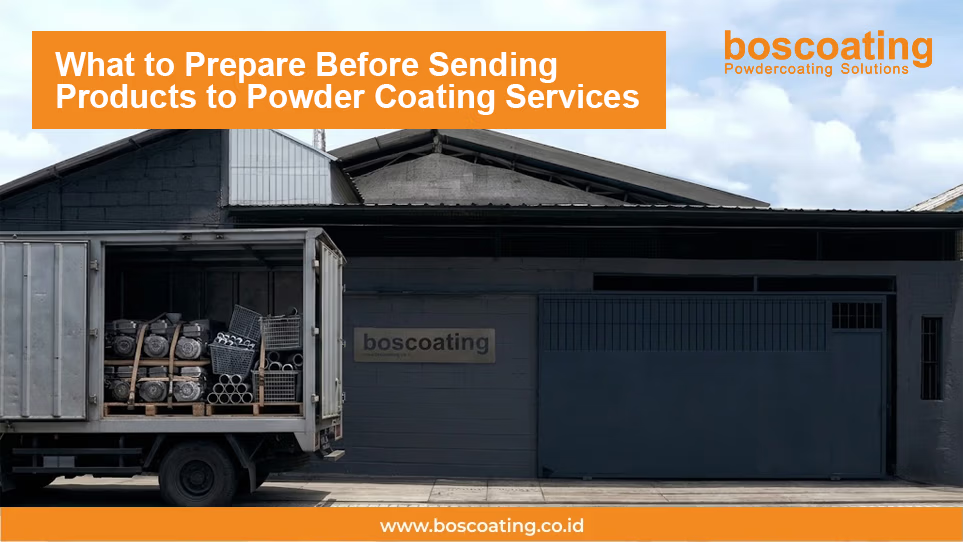
Sending a metal product to a powder coating service is not simply a matter of delivering the product and choosing a color. To ensure a smooth process and achieve the desired finishing quality, several aspects should be prepared in advance.
Proper preparation can help reduce the risk of problems during the powder coating process, minimize rework, and ensure that the product can be processed efficiently.
From the condition of the surface and product design to color selection and transportation, every detail can affect the final result.
1. Make Sure All Fabrication Work Is Complete
Before sending a product for powder coating, make sure all fabrication work has been completed. This includes:
- Welding
- Cutting
- Drilling
- Grinding
- Bending
- Assembly
Powder coating should generally be one of the final stages of the manufacturing process. If the product still needs to be welded, drilled, or ground after coating, the finished coating may be damaged and require repair. For this reason, perform a final inspection before sending the product to the powder coating provider.
2. Check the Condition of the Product Surface
Surface condition has a significant impact on the final powder coating result. Before sending the product, inspect the surface for contaminants or fabrication issues that may need attention. Some things to check include:
- Rust
- Oil and grease
- Dust and dirt
- Weld spatter
- Welding slag
- Old paint
- Excessively rough surfaces
This does not necessarily mean that all surface contaminants must be removed before delivery. A professional powder coating provider will normally have its own surface preparation or pretreatment process. However, providing information about the product's initial condition allows the coating provider to determine the appropriate preparation process.
3. Make Sure the Product Design Is Suitable for Powder Coating
Product design can also influence the coating process. Products with numerous cavities, narrow gaps, or difficult-to-reach areas may require additional attention during application.
For products made with hollow sections, for example, drain and vent holes should be considered. These openings help remove liquids during pretreatment and allow air to escape during the heating process.
It is also important to consider suitable hanging points. Products need to be suspended during powder coating, so properly positioned hanging points can provide better access to the product's surfaces.
It is also important to consider suitable hanging points. Products need to be suspended during powder coating, so properly positioned hanging points can provide better access to the product's surfaces.
4. Determine the Color and Finish
The desired color and finish should ideally be determined before the product is sent for powder coating. Powder coating is available in a wide variety of colors and surface finishes, including:
- Smooth
- Matte
- Gloss
- Textured
Color can be selected based on aesthetic requirements, corporate identity, or specific functional requirements within an industrial environment. If a specific color system such as RAL is being used, provide the exact color code to avoid miscommunication.
For projects involving multiple colors, clearly indicate which components or areas should receive each color.
5. Determine the Required Coating Performance
Different products operate in different environments. Therefore, coating requirements should be determined based on how and where the product will be used. Consider the following:
- Will the product be used indoors or outdoors?
- Will it be exposed to rain or direct sunlight?
- Will it be exposed to high humidity?
- Is corrosion a significant concern?
- Will the surface experience frequent friction or impact?
This information can help the powder coating provider select a coating system and powder material that are appropriate for the intended application.
6. Provide Information About the Product Material
The type of material used in the product should also be communicated to the powder coating provider. Common substrates include:
- Mild steel
- Carbon steel
- Galvanized steel
- Aluminium
- Stainless steel
Different materials may require different surface preparation methods. Galvanized steel and aluminium, for example, may require specific preparation to achieve proper powder coating adhesion. Providing accurate material information in advance allows the coating process to be prepared more effectively.
However, not all types of metal have the same characteristics when it comes to powder coating. The material type, surface condition, and required surface preparation can affect the final result and coating adhesion. Therefore, it is important to understand which types of metal can be powder coated and what factors should be considered before the coating process begins. Learn more about whether all types of metal can be powder coated.
7. Consider Product Size and Weight
Product dimensions and weight are important information to provide before delivery. Powder coating facilities use equipment for handling, hanging, pretreatment, and curing. The coating provider therefore needs to understand the size and weight of the product in advance. The following information should ideally be provided:
- Length
- Width
- Height
- Weight
- Quantity
For oversized products or products with unusual shapes, this information becomes even more important because handling and positioning need to be planned carefully.
8. Separate Components with Different Requirements
Not every component within a product necessarily requires the same coating treatment. For example, a product may contain components that require:
- Different colors
- Different surface finishes
- No coating
- Assembly after powder coating
If different components have different requirements, clearly identify and separate them before the coating process begins. This helps reduce the risk of mistakes during production.
9. Identify Areas That Should Not Be Coated
Powder coating adds a layer of material to the surface of a product. Therefore, certain areas may need to remain uncoated to maintain their original dimensions or functionality. Examples include:
- Threads
- Precision holes
- Electrical contact areas
- Mating surfaces
- Bearing seats
- Fitting surfaces
These areas may require masking before the coating process. Clearly mark or communicate all areas that must remain free of coating to the powder coating provider. The more precise the information, the lower the risk of errors in the finished product.
10. Discuss Special Requirements with Your Powder Coater
If the product has specific requirements, do not wait until the product arrives at the coating facility to communicate them. Important details to discuss may include:
- Powder coating type
- Color
- Gloss level
- Target coating thickness
- Operating environment
- Masking requirements
- Quality standards
- Inspection requirements
Early communication allows the powder coating provider to prepare the process according to the project's requirements. This is particularly important for industrial products or large-volume projects where consistent results are required across multiple units.
11. Consider Packing and Transportation
Finished fabricated products should be transported to the powder coating facility safely. Impacts during transportation can cause dents, scratches, or other damage before the product even enters the coating process. Depending on the product, consider:
- How products will be stacked
- Use of separators
- Protection against impact
- Product positioning during transportation
- Loading and unloading procedures
For oversized products or components with fragile sections, the handling method should ideally be discussed with the coating provider in advance.
12. Use a Checklist Before Sending the Product
Before delivery, perform a simple final check to ensure that all important information and requirements have been prepared.
1. Fabrication
- All fabrication work is complete.
- Welding and grinding are finished.
- No additional hot work will be required after coating.
2. Product
- Material has been identified.
- Dimensions and weight are known.
- Surface condition has been inspected.
3. Coating
- Color has been confirmed.
- Surface finish has been confirmed.
- Special requirements have been communicated.
- Masking areas have been identified.
4. Logistics
- Product quantity has been confirmed.
- Products are properly packed.
- Handling requirements have been considered.
A simple checklist like this can help prevent misunderstandings before the powder coating process begins.
Why Is Preparation Before Powder Coating Important?
Proper preparation does more than help achieve a better finish. It can also make the overall process more efficient. Providing complete information allows the powder coating provider to understand the product requirements before production begins. Potential issues can therefore be identified earlier, and the necessary preparation can be arranged in advance.
This can reduce the risk of rework, production delays, and unnecessary additional costs. For large-volume projects, this becomes even more important. A small mistake on one unit can become a much larger issue when the same mistake is repeated across dozens or hundreds of products.
Conclusion
Before sending a product to a powder coating service, make sure all fabrication work has been completed and the product has been properly inspected. Provide information about the material, dimensions, weight, color, surface finish, performance requirements, and areas that must remain uncoated.
Product design, hanging points, drain holes, and spray gun accessibility should also be considered during the earlier stages of manufacturing.
Most importantly, communicate with your powder coating provider before sending the product. The more complete the information, the easier it is to prepare the coating process according to the product's requirements.
With proper preparation, the powder coating process can run more efficiently and help deliver a consistent, clean, and durable finish that meets the needs of the final product.