Can Powder Coating Be Applied to Rusty Metal Products
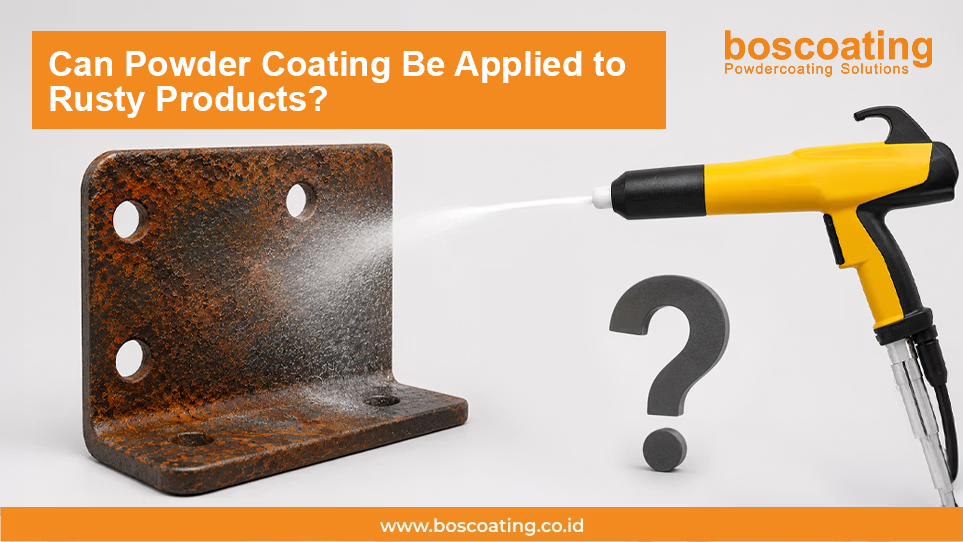
Metal products that have been used for years do not always need to be replaced simply because rust has started to appear. In many cases, products that still have a sound underlying structure can be restored through a re-coating process.
Powder coating is one finishing option that can be considered. However, one important point needs to be understood: powder coating should not be applied directly over rust.
The rust needs to be removed and the surface properly prepared before the coating process begins. The condition of the underlying material should also be evaluated to determine whether the product is still suitable for re-coating.
So, how much rust can still be treated? And when is a product no longer suitable for powder coating?
Can Rusty Products Be Powder Coated?
Yes, but not directly over rust.
Powder coating requires a clean and properly prepared surface to achieve good adhesion. If rust is left on the surface and powder coating is applied directly over it, the underlying problem does not simply disappear. Corrosion may continue to develop and eventually cause the coating to lose adhesion, peel, or develop other defects.
For this reason, rusty products should undergo proper surface preparation before powder coating.
The key consideration is not simply whether rust is present, but how severe the corrosion is and what condition the underlying material is in.
Why Does Rust Need to Be Removed?
Rust is the result of corrosion affecting iron or steel. The resulting rust layer does not have the same surface characteristics as sound metal. If rust is not properly removed, several problems may occur after powder coating, including:
- Poor coating adhesion
- Premature peeling
- Corrosion continuing underneath the coating
- Surface imperfections
- An uneven or unattractive final appearance
Powder coating is designed to provide a protective and decorative finish. It is not a material intended to repair metal that has already been structurally damaged by corrosion. Therefore, surface preparation is a critical part of re-coating rusty products.
Understanding the Severity of Rust
Not all rust represents the same level of damage. Before deciding whether a product can be re-coated, both the surface condition and the underlying material should be evaluated.
1. Surface Rust or Light Rust
Light rust typically appears as discoloration or a thin layer of corrosion on the surface.
In this condition, the underlying material is usually still relatively sound. Once the rust and other contaminants have been properly removed, the product may still be suitable for powder coating.
2. Moderate Rust
At this stage, the rust may be thicker and accompanied by a rough or partially peeling surface.
The product may still be suitable for re-coating, but it will generally require more thorough surface preparation. The underlying material should also be inspected to ensure that significant damage has not occurred.
3. Heavy Rust
Heavy rust may be identified by thick corrosion, severe surface roughness, flaking material, or noticeable loss of material thickness.
In such cases, simply cleaning the surface and applying powder coating may not be enough. The structural condition of the product should be evaluated first.
4. Corrosion That Has Damaged the Material
If corrosion has caused holes, severe thinning, brittleness, or loss of structural strength, powder coating is no longer the primary solution.
The product may require repair, replacement of certain components, or complete replacement before a new finishing system can be applied.
What Happens Before Powder Coating?
Rusty products generally require more extensive surface preparation than new products that are still in good condition. The preparation process may include:
- Cleaning
- Degreasing
- Rust removal
- Abrasive blasting
- Surface preparation
- Pretreatment appropriate for the substrate
The main objective is to remove rust, oil, dirt, and other contaminants so that the metal surface is properly prepared for powder coating. The exact method will depend on factors such as the substrate material, severity of corrosion, product size, and coating system being used.
Can Sandblasting Remove Rust?
One commonly used method for preparing metal surfaces is abrasive blasting, often referred to as sandblasting in general use. The process uses abrasive media to clean the surface and remove rust, old coating, and certain contaminants.
In addition to cleaning the surface, abrasive blasting can create a surface profile that supports better coating adhesion. However, the preparation method and level of surface treatment should still be selected according to the product's actual condition. Not every product requires exactly the same treatment.
What If the Rust Is Already Peeling?
When rust is already flaking or peeling, loose rust and unstable material should be removed before coating. Loose rust, flaking old coating, and poorly adhered material should not simply be left underneath the powder coating.
Once the surface has been cleaned, the underlying metal should be inspected. Important questions include:
- Does the material still have sufficient thickness?
- Are there holes caused by corrosion?
- Has the surface become too weak?
- Is the product still structurally sound?
- Is the product still suitable for use?
The answers will help determine whether the product can proceed to re-coating or requires repair first.
When Can a Rusty Product Still Be Re-Coated?
An older rusty product may still be a good candidate for powder coating when its underlying structure remains in good condition. Some indicators include:
- Corrosion is primarily limited to the surface.
- The main structure remains strong.
- Material thickness has not been significantly reduced.
- There are no corrosion holes.
- The surface can be properly prepared.
In these circumstances, re-coating can be an effective way to restore the appearance of the product while providing renewed surface protection.
When Should a Rusty Product Not Be Powder Coated?
Powder coating may not be the right solution when the underlying metal has already suffered severe damage. Examples include:
- The material has become excessively thin.
- Corrosion has created holes.
- Structural strength has been compromised.
- Certain sections have become brittle or broken.
- The damage is too extensive to repair economically.
In these situations, applying a new coating will not restore the strength of metal that has already been lost. If a component is no longer structurally suitable for use, the material problem should be addressed before considering the finishing process.
Powder Coating Is Not a Rust Remover
A common misconception is that powder coating can remove or stop rust by itself. Powder coating is not a rust converter, nor is it a repair material for severely damaged metal.
If rust remains on the surface and the substrate is not properly prepared, the coating may simply cover the existing problem. This is why final coating quality depends heavily on the condition of the substrate and the quality of surface preparation before powder coating.
Old Products vs. New Products
There is an important difference between powder coating a new product and re-coating an older product.
- New Products : New products generally have not yet developed corrosion, so the process can focus on cleaning, pretreatment, and proper surface preparation before coating.
- Older Products : Older products require additional inspection to determine the condition of the existing coating, the severity of corrosion, and the condition of the underlying metal.
In some cases, re-coating can be a practical alternative to manufacturing a completely new product, particularly when the existing structure remains in good condition.
What Should Be Considered After Re-Coating?
After a product has been successfully re-coated, proper maintenance is still important for preserving the finish. Some useful practices include:
- Do not leave coating damage untreated for extended periods.
- Clean dirt and contaminants from the surface.
- Pay attention to areas exposed to frequent impact.
- Inspect the coating periodically.
- Address damaged areas as soon as possible.
Powder coating can provide good surface protection, but the operating environment and actual usage will still influence its service life.
The service life of powder coating is also influenced by usage conditions, the surrounding environment, surface preparation quality, and maintenance after the coating process. Understanding these factors can help determine when the coating should be inspected, maintained, or recoated to keep the protection and finishing quality in good condition. Learn more about coating service life and its impact on product quality.
Conclusion
Rusty products can still be powder coated, provided that the underlying material remains suitable and the rust is properly removed before the coating process.
Light to moderate surface rust on structurally sound metal can often be addressed through appropriate surface preparation and re-coating. However, when corrosion has caused severe thinning, holes, brittleness, or structural damage, powder coating alone cannot restore the material.
Therefore, before considering re-coating, do not look only at the condition of the surface. The condition of the metal underneath the rust also needs to be evaluated.
With proper assessment, thorough surface preparation, and a suitable powder coating system, older metal products that remain structurally sound can be restored and returned to service with improved appearance and surface protection.