Coating Lifespan and Its Impact on Product Performance
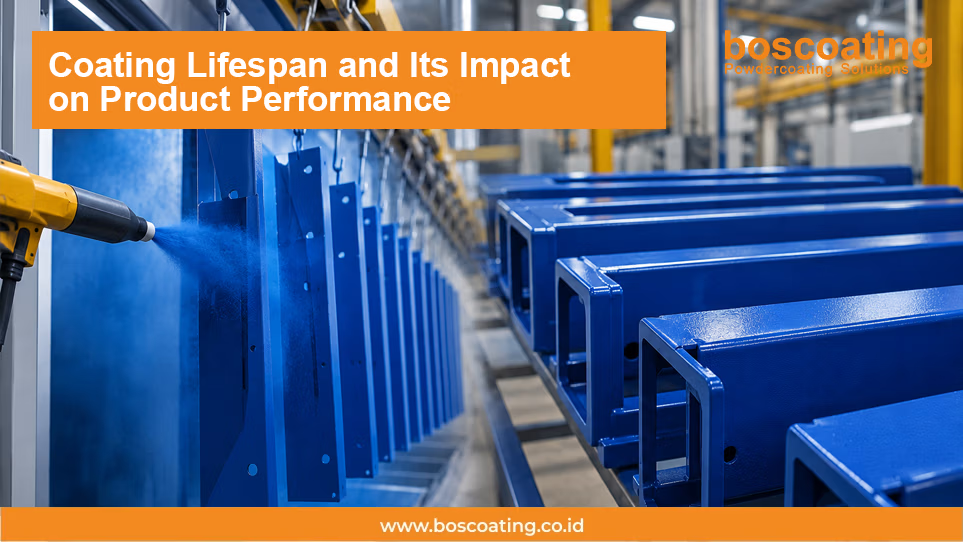
In metal fabrication and manufacturing industries, coating is not only used for aesthetic purposes but also as a critical protective layer against environmental exposure. One of the most important considerations in any coating system is its lifespan.
The lifespan of a coating does not only determine how long the surface looks good, but also how long it can effectively protect the material, influence maintenance costs, and affect the overall economic value of the product.
What Is Coating Lifespan?
Coating lifespan refers to the period during which a coating layer can still perform its intended function effectively. This includes:
- Visual appearance retention
- Corrosion protection performance
- Stability under environmental exposure
- Long-term functional durability
Coating lifespan is not always equal to the lifespan of the material itself.
Environmental Factors Affecting Coating Lifespan
Environment plays a major role in determining how long a coating will last. Key factors include:
- Indoor vs outdoor exposure
- UV radiation exposure
- Humidity levels
- Industrial conditions (dust, oil, particles)
- Coastal vs non-coastal environments
The more aggressive the environment, the faster the coating may degrade.
The more aggressive the environment, the faster the coating may degrade.
The condition of the surface before coating significantly affects coating performance. Important factors include:
- Surface cleanliness
- Presence of rust or oxidation
- Oil or contamination residues
- Quality of pre-treatment process
Poor surface preparation can significantly reduce coating lifespan.
Role of Coating Thickness
Coating thickness must follow proper specifications to ensure performance. Key considerations:
- Minimum and maximum thickness levels
- Consistency across the surface
- Risks of under- or over-thickness
- Impact on protective performance
Incorrect thickness can reduce the effectiveness of protection.
Usage Conditions and Operational Load
How a product is used also affects coating durability. Typical conditions include:
- Static vs frequently handled products
- Exposure to friction or light impact
- High-activity industrial areas
- Direct operator interaction
Higher mechanical exposure generally leads to faster wear.
Impact of Coating Lifespan on Product Performance
When coating begins to degrade, the impact goes beyond appearance. Common effects include:
- Reduced visual quality
- Decreased corrosion protection
- Lower overall product value
- Loss of protective function
This can directly affect long-term product performance.
Relationship Between Coating Lifespan and Maintenance
Coating lifespan is closely related to maintenance requirements. Key implications:
- Frequency of repainting or repair
- Long-term maintenance costs
- Production or operational downtime
- Overall efficiency
Longer-lasting coatings help reduce maintenance needs.
Coating Lifespan in Indoor Applications
Indoor environments are generally more stable. Characteristics include:
- No direct rain exposure
- Minimal UV exposure
- Controlled humidity levels
- Lower corrosion risk
As a result, coating lifespan tends to be longer indoors.
Coating Lifespan in Outdoor Applications
Outdoor conditions are more challenging and aggressive. Key factors include:
- Direct sunlight exposure
- Rain and high humidity
- Daily temperature changes
- Higher corrosion risk
Therefore, coating lifespan in outdoor applications is generally shorter compared to indoor environments, depending on the coating system used.
Comparison with Other Finishing Systems
Different finishing systems offer different durability levels:
- Powder coating vs liquid paint
- Powder coating vs epoxy systems
- Powder coating vs hot-dip galvanizing
Each system has its own strengths and limitations in terms of lifespan, appearance, and cost.
Signs of Coating Degradation
Common indicators that coating performance is declining:
- Color fading or change
- Surface dullness
- Chalking (fine powder residue)
- Small surface cracks
- Early signs of corrosion
These signs help identify issues before severe damage occurs.
Impact on Overall Product Value
Coating lifespan directly influences product value. Key impacts include:
- Reduced aesthetic appeal
- Lower customer confidence
- Increased maintenance costs
- Reduced economic lifespan of the product
A high-quality coating helps maintain product value over time.
Conclusion
Coating lifespan is not only about how long a surface looks good, but also how long it can effectively protect the material underneath. Many factors influence it, including environmental conditions, surface preparation quality, and usage intensity.
Understanding these factors helps in:
- Selecting the right coating system
- Managing lifespan expectations
- Optimizing maintenance costs
- Improving long-term product performance
For industrial powder coating needs in Surabaya and Sidoarjo, Boscoating focuses on delivering coating results that are not only visually consistent but also provide reliable protection aligned with project requirements.