Which Components Are Suitable for Powder Coating
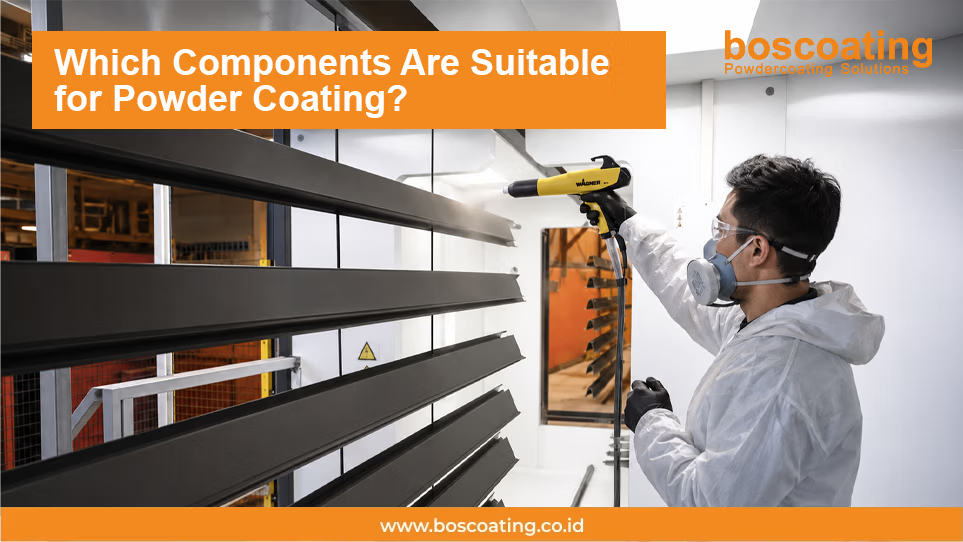
Powder coating has become one of the most widely used finishing methods for metal products across various industries. From industrial equipment to commercial products, it is valued for its ability to provide excellent corrosion resistance, improve durability, and create a clean, professional appearance.
However, not every metal component requires the same type of finishing. Choosing the right finishing method should take into account the component's function, material, operating environment, and aesthetic requirements.
So, which components are actually suitable for powder coating? This article explains the key characteristics to look for and provides examples of applications where powder coating is commonly used.
Not Every Component Requires the Same Finishing Method
Every metal product is designed for a different purpose. Some components require maximum corrosion resistance, while others prioritize appearance, durability, or specific technical performance.
For this reason, powder coating is not always the ideal finishing solution for every application. Depending on the operating conditions, alternative finishing methods such as galvanizing, anodizing, or liquid painting may be more appropriate.
Understanding the product's requirements from the beginning helps manufacturers select the most suitable finishing system in terms of both performance and cost efficiency.
Materials Commonly Used for Powder Coating
Powder coating can be applied to a wide variety of metal substrates, provided the material can withstand the curing temperature required during the coating process. Some of the most common materials include:
1. Carbon Steel and Mild Steel
Carbon steel and mild steel are among the most common materials finished with powder coating. Without adequate protection, both materials are susceptible to corrosion when exposed to moisture and certain environmental conditions.
Powder coating provides a durable protective layer while significantly improving the product's appearance.
2. Galvanized Steel
Galvanized steel can also be powder coated, although proper surface preparation is essential to ensure good coating adhesion.
Combining galvanizing with powder coating is often referred to as a duplex coating system and is commonly selected for applications requiring enhanced corrosion protection.
3. Aluminium
Aluminium naturally offers good corrosion resistance. However, powder coating is frequently applied to improve aesthetics, provide a wide range of color options, and increase resistance to scratches and weather exposure.
4. Stainless Steel
Although stainless steel is well known for its corrosion resistance, powder coating may still be applied when a specific color, decorative finish, or additional surface protection is required.
Characteristics of Components Suitable for Powder Coating
Rather than focusing solely on product categories, it is often more useful to identify the characteristics of components that are well suited for powder coating.
- Components That Require Corrosion Protection : Metal components used in humid environments, outdoor installations, or corrosive conditions can benefit significantly from the protective properties of powder coating.
- Components That Require an Attractive Appearance : Powder coating produces a smooth, uniform finish with consistent color, making it an excellent choice for components that are visible to customers or end users.
- Components Exposed to Minor Scratches : Products that are frequently handled or regularly used often benefit from the scratch resistance provided by powder coating.
- Components Manufactured in Large Quantities : Powder coating is widely used in mass production because it delivers consistent color, finish quality, and coating thickness across large production volumes.
- Components with Relatively Open Designs : Products with accessible and uncomplicated geometries generally allow for more even powder distribution, resulting in higher-quality coating performance.
Examples of Components Commonly Powder Coated
Powder coating is used on a wide variety of fabricated metal components across numerous industries. Some common examples include:
- Mounting brackets
- Machine covers
- Electrical enclosure boxes
- Machine frames
- Machine guarding
- Storage racks
- Steel fences and gates
- Handrails
- Metal furniture
- Motor mounting brackets
- Metal housings
- Base plates
- Pipe supports
These are only a few examples. In practice, many other metal components can benefit from powder coating, provided the material and application requirements are suitable.
When Powder Coating May Not Be the Best Choice
Although powder coating offers many advantages, it is not always the most appropriate finishing solution. The following situations may require alternative surface treatment methods.
1. Components Operating at Very High Temperatures
Powder coating has temperature limitations. Components that are continuously exposed to extremely high operating temperatures may require specialized high-temperature coating systems.
2. Components That Will Be Welded After Finishing
If additional welding is planned after the finishing process, powder coating should generally be applied only after all fabrication work has been completed.
3. Components Subjected to Constant Metal-to-Metal Friction
Surfaces that experience continuous metal-to-metal contact may wear through the coating more quickly, reducing its long-term effectiveness.
4. Components with Extremely Tight Dimensional Tolerances
Because powder coating adds measurable coating thickness, dimensional tolerances should be considered during the design stage, particularly for precision components.
5.Components Requiring Electrical Conductivity
Since powder coating acts as an insulating layer, it may not be suitable for surfaces that require direct electrical conductivity or grounding contact.
Factors to Consider Before Choosing Powder Coating
Before selecting powder coating as a finishing method, several factors should be carefully evaluated. These include:
- The type of metal substrate.
- The intended operating environment.
- Corrosion protection requirements.
- Desired appearance and color.
- Component size and geometry.
- Required coating thickness.
- Expected service life.
Evaluating these factors helps ensure that powder coating is the most appropriate finishing solution for the application.
Consult Your Powder Coating Provider Before Mass Production
If a product is intended for large-scale manufacturing, consulting a powder coating specialist during the early stages of product development can provide significant advantages.
Early collaboration allows manufacturers to evaluate material selection, component design, coating thickness, color selection, and other technical considerations before production begins.
This proactive approach helps improve finishing consistency, reduce the risk of redesign or rework, and optimize overall production efficiency.
Conclusion
Powder coating is an excellent finishing solution for a wide range of metal components. In addition to enhancing appearance, it provides reliable protection against corrosion, minor scratches, and environmental exposure, helping extend the service life of many products.
However, selecting powder coating should involve more than simply identifying the type of product. Factors such as material selection, component function, operating environment, and performance requirements should all be considered to ensure the finishing system is appropriate for the application.
By understanding which components are best suited for powder coating, manufacturers can achieve higher-quality finishes, improve product durability, and maximize the long-term value of their metal components.