When Should You Use Powder Coating and When Should You Not
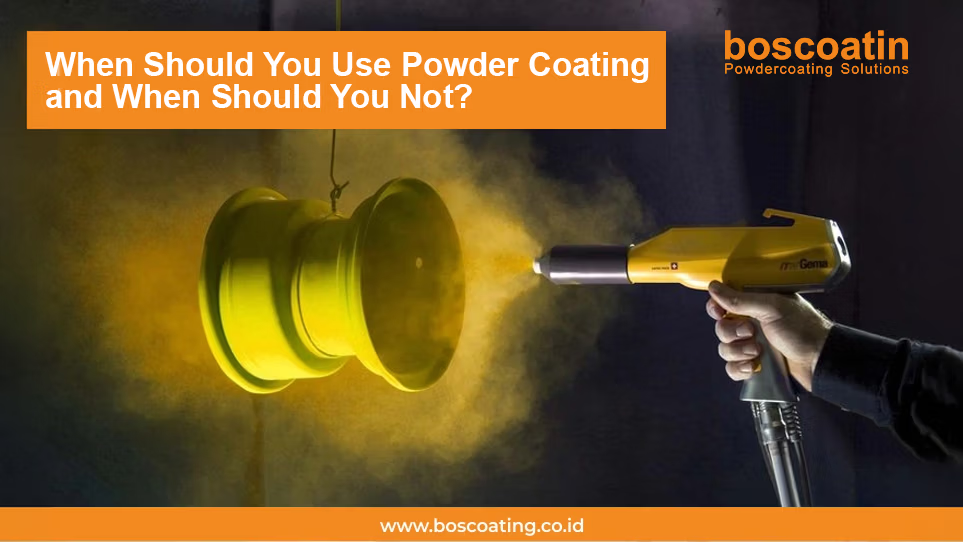
Powder coating is one of the most popular finishing methods for a wide range of metal products. In addition to providing a clean and professional appearance, powder coating can help protect metal surfaces against corrosion, scratches, and everyday wear.
However, powder coating is not always the best choice for every product.
Every component has different operating conditions, materials, shapes, and performance requirements. Therefore, the right finishing method should be selected based on the application's specific needs rather than simply based on popularity or initial cost.
So, when is powder coating the right choice, and when should you consider another finishing method?
Powder Coating Is Not Always the Best Choice
There is no single finishing method that is suitable for every type of product. A component used indoors has different requirements from one that is continuously exposed to rain and sunlight. Similarly, a component operating at high temperatures has different requirements from a decorative product where appearance is the primary concern.
Before choosing powder coating, consider factors such as:
- Product material
- Operating environment
- Working temperature
- Product shape and size
- Aesthetic requirements
- Required durability
- Production volume
- Available budget
Considering these factors from the beginning can help you select a finishing system that is better suited to the application.
When Should You Use Powder Coating?
Powder coating is generally a good option when a product requires a combination of durability, surface protection, and a consistent appearance.
1. When Corrosion Protection Is Required
Steel and iron products can corrode when they are not adequately protected.
Powder coating creates a protective layer over the metal surface, helping reduce direct exposure to moisture and environmental conditions that can contribute to corrosion.
For applications with higher corrosion risks, the pretreatment process and powder coating system should be selected according to the operating environment.
2. When Long-Lasting Finishing Is Required
Powder coating is known for its good resistance to everyday use, making it suitable for many components that require a durable finish.
When the appropriate powder material, pretreatment, application process, and curing conditions are properly controlled, powder coating can provide consistent protection for many years.
3. When Appearance Is an Important Consideration
Powder coating is not only a protective finish. It is available in a wide range of colors and surface characteristics, including:
- Smooth
- Matte
- Glossy
- Textured
This makes powder coating suitable for products where a clean and consistent appearance is important. Colors can also be selected to match corporate identities, architectural designs, or specific visual requirements.
4. When Products Are Manufactured Repeatedly
Powder coating is also well suited to products manufactured in multiple quantities.
A controlled coating process allows color and finish characteristics to remain consistent across multiple units. This is one reason powder coating is widely used in manufacturing applications.
When Products Need to Withstand Everyday Use
Products that are frequently handled, exposed to light friction, or regularly touched can also benefit from powder coating. Examples include components that are frequently moved, handled, or used during daily operations.
However, there is an important distinction between normal use and continuous heavy abrasion. Powder coating can provide good durability, but it does not mean the coating is completely resistant to wear. If a surface is continuously exposed to metal-to-metal contact or abrasive wear, another finishing system may be more appropriate.
When Is Powder Coating Less Suitable?
Although powder coating offers many advantages, there are situations where it needs to be evaluated more carefully.
1. Components Operating at Very High Temperatures
Powder coating systems have specific temperature limitations.
For components that continuously operate at very high temperatures, a coating system specifically designed for high-temperature applications may be more suitable.
Therefore, the actual operating temperature should be known before selecting the finishing system.
2. Products That Still Require Welding After Coating
Powder coating should generally be applied after fabrication work has been completed.
If a product still needs to be welded after coating, the heat generated during welding can damage the powder coating around the welded area.
For this reason, it is better to complete all fabrication work before applying the final finish.
3. Products Exposed to Heavy Friction
Powder coating provides good resistance under normal conditions, but it is not designed to withstand every type of mechanical wear.
Products exposed to heavy friction, abrasion, or continuous metal-to-metal contact should be evaluated carefully.
Depending on the application, another finishing method may provide more suitable performance.
4. Applications Requiring Very Tight Dimensional Tolerances
Powder coating adds a layer of material to the product surface.
For components with very tight dimensional tolerances, coating thickness needs to be considered during the design stage.
Areas such as threads, bearing seats, precision holes, and mating surfaces may require masking to maintain the required dimensions.
5. Applications Requiring Electrical Conductivity
Powder coating generally forms an electrically insulating layer.
Therefore, it may not be suitable for areas that require direct electrical contact or electrical conductivity.
For such applications, specific areas may need to remain uncoated or require a different finishing approach.
What About Outdoor Applications?
Outdoor use does not automatically mean that powder coating is either suitable or unsuitable. The more important consideration is understanding the environment where the product will be installed.
Outdoor products may be exposed to:
- UV radiation
- Rain
- High humidity
- Temperature changes
- Dust and dirt
- Corrosive environments
For outdoor applications, the choice of powder coating system and pretreatment is particularly important. More aggressive environments, such as areas near the coast, may require additional consideration. The coating system should be selected according to the level of exposure and the expected service life of the product.
Powder Coating vs. Other Finishing Methods
For some applications, powder coating may not be the only option.
- Powder Coating : Suitable when a combination of durability, surface protection, color options, and consistent finishing is required for metal products.
- Liquid Painting : Liquid paint can be an alternative for very large products or certain shapes that are difficult to fit into a curing oven. It also has different application characteristics and may be suitable for specific requirements.
- Galvanizing : Galvanizing provides corrosion protection through a zinc coating. It is commonly considered for steel structures and applications requiring corrosion resistance in outdoor environments.
- Anodizing : Anodizing is commonly used for aluminium and can provide both surface protection and a distinctive appearance.
The choice between these methods should be based on the application requirements rather than simply the type of product.
Don't Choose Based on Price Alone
Cost is an important factor when selecting a finishing method, but it should not be the only consideration. A finishing system with a lower initial cost may not necessarily be the most economical option over the long term.
Also consider:
- Service life
- Maintenance requirements
- Risk of damage
- Recoating frequency
- Corrosion protection
- Component replacement costs
Looking at the overall cost throughout the product's service life can lead to a more objective finishing decision.
Factors to Consider Before Choosing Powder Coating
Before deciding to use powder coating, the following questions can help determine whether it is suitable:
- What is the product made of? Make sure the material is compatible with the powder coating process and can be properly prepared.
- Where will the product be used? Indoor, outdoor, humid, and aggressive environments have different requirements.
- What is the product's operating temperature? This is important when determining whether powder coating can safely be used.
- Does the product require a specific appearance? Color, gloss level, and texture can all be considered.
- Will the product experience friction or impact? Consider the level of mechanical exposure the coating will experience during use.
- Are there areas with tight dimensional tolerances? If so, these areas may require masking.
- How long is the product expected to last? The target service life can help determine the most appropriate finishing system.
Consult a Powder Coating Provider Before Choosing a Finish
If you are unsure whether powder coating is the right option, discussing the application with a professional powder coating provider before production begins can be helpful.
Information that should ideally be prepared includes:
- Product material
- Product dimensions
- Installation location
- Environmental conditions
- Operating temperature
- Color requirements
- Durability requirements
- Production quantity
With this information, the powder coating provider can better understand the application and recommend a suitable finishing approach.
Conclusion
Powder coating is an excellent finishing option for many metal products, particularly when surface protection, everyday durability, and a clean, consistent appearance are required.
However, powder coating is not a universal solution. Very high operating temperatures, heavy friction, electrical conductivity requirements, extremely tight dimensional tolerances, or unfinished fabrication work may be reasons to consider another finishing method.
Therefore, the right finishing method is not always about choosing the most popular coating, but choosing the system that best matches the product's actual operating conditions.
By considering the material, environment, function, performance requirements, and long-term costs, you can make a more informed decision about whether powder coating is the right finishing solution for your product.